


Telecommunications Field Engineering in Australia
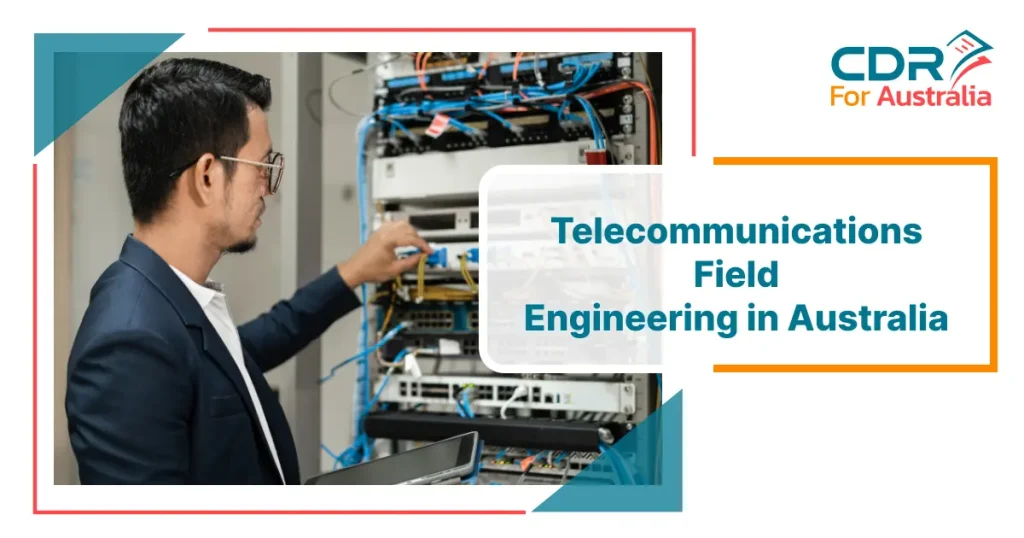
Simply put Telecommunications Field Engineering in Australia is the effort undertaken by the engineers who are predominantly in the field i.e. not in the office setting but are instead deploying, maintaining, troubleshooting, and optimising telecommunications infrastructure (fibre, satellite links, radio systems, mobile base stations, etc.).
Why it matters
The occupational profile of the classification Telecommunications Field Engineers (ANZSCO 313212), states that they plan, design, commission and monitor extensive telecommunications networks and equipment, offer technical advice and information, diagnose intricate issues and take action to solve them.
The term field engineering here is used to stress the fact that a significant part of the work is done on-site (e.g. cell towers, installation locations, network hubs) and not necessarily in the lab.
- The deployment of the digital infrastructure (5G, fibre-to-the-premises, rural connectivity) in Australia implies that the number of qualified field engineers grows more and more numerous.
- Telecommunication, utility, construction and mining organisations are some of the organisations that depend on such professionals to ensure uptime and meet their promises on connectivity.
- Telecommunications Field Engineering in Australia provides a gateway to the engineering market, particularly combined with migration requirements, to migrants and internationally qualified engineers.
Get Free Consultation
Our Amazing Features
✅ EA Assessed Engineers as CDR Writers
✅ 10+ Years of Experience
✅ Australia Based Company
✅ All Engineering Disciplines
✅ 100% Success Rate with EA
✅ 100% Plagiarism Free Report or Turnitin
✅ Unlimited Free Modification or Corrections
✅ Negative Assessment? Get Refund within 2 hours
✅ 24*7 Live Chat, Phone Call and WhatsApp Facility
✅ Direct Conversation with The CDR Experts
✅ Beat the value offer
✅ Complete CDR Before the Agreed Due Date
Telecommunications Field Engineering in Australia Salary
Among the questions which the future employees may wonder initially is: What can I earn working in the telecommunication field engineering in Australia?
Here are some data points:
- An average (aggregated) salary of a Field Engineer, Telecommunications in Australia according to a recent posting on the Web site PayScale is approximately AU71,216 per year (2025 estimate) in early/mid-level.
- Wider scopes of telecommunications engineers (not necessarily field-engineering but similar) will display a pay scale of between AU$80,000 and more than AU$100,000 per year.
- Based on a migration-oriented site, the average salary of the ANZSCO code 313212 (Telecommunications Field Engineer) stands at AU $90,000 to AU $100,000 annually, though it might be more of those who are already experienced.
- In SEEK, there is a job listing of field-technician/field-engineer job positions available at approximately AU$68,000-74,000 with a vehicle in some locations.
Important point to note as an upcoming graduate in this sector: When you are first starting in the sector, you should expect around AU 70,000 to AU 90,000, though you might go higher (above AU 100,000) in case of significant experience, specialisation or senior positions.
Telecommunications Field Engineering in Australia Requirements
What does it take to be successful in the Telecommunications Field engineering in Australia? I have summarized the education, experience, competency, and other details that you ought to know below.
Education & Qualifications
- Based on the occupational profile, 16% of the current workers have a bachelor’s degree, 17.3% an advanced diploma/ diploma, and 37.2% certificate III/ IV.
- In the case of migration and formal classification (ANZSCO 313212 / Skill Level 2) it is claimed: AQF Associate Degree, Advanced Diploma or Diploma … at least three years of relevant experience may replace a formal qualification.
- Hence, a complete bachelor’s degree is advantageous, but most of the positions in the field of engineering may be attained with a diploma/advanced diploma and practical experience.
Experience & Skills
- Good practical knowledge of fibre-optic, microwave links, mobile base stations, network commissioning, and fault-finding.
- Knowledge on how to set up and integrate networks and telecommunications technology into computer software, hardware, desktops, peripherals, databases, and operating systems.
- Documentation skills: develops and logs the information about the details and status, and location of inventories, parts, equipment, and instruments, and keeps the documentation of communication policies, procedures, guidelines, and regulations.
- Good problem-solving: “recognizes complicated issues and gets into action to solve them.
- Field presence: Does not mind working outside, high (tower climbs), and at times distant sites, and in conjunction with construction/installation teams.
- Communication: Vendor, supplier, client, and other team communication.
- The possession of a valid driver’s licence, capacity to work safely at heights and on rigging/mast equipment, and knowledge of Australian OH&S standards will come in handy in Australia.
Migration / Visa Related Considerations
As an overseas-based engineer, in the event that you were thinking about migrating to a position in the telecommunications field, engineering:
- The job falls under ANZSCO code 313212.
- You must fulfill the requirements of migration, including: minimum years of relevant skilled work, age limits, being competent in English etc. As an example, some visa streams have one year of skilled work experience within the last 3 years listed on one source.
- In case you are using the role in the ability to apply to a skilled migration, make sure that what you are skilled in fits the task and level in the occupation.
Telecommunications Field Engineering in Australia Jobs
We will have a look at the job market, opportunities, trends and how you can fit in this arena.
Job Market Overview
The profile of occupations indicates that the number of employed in this very specific classification (313212) is about 850 currently and there is a full-time share of 91.
Among the states, most roles are centralized in New South Wales (34.6 ), Victoria (27.7 ) and Queensland (17.3 ).
Jobs available: On a SEEK search, one will find several positions of field-technician / field-engineer in Sydney, Adelaide, Brisbane etc., with different salaries and different experience.
Key Areas of Opportunity
- Fibre-optics implementation: Field engineers are needed to install, splic and test fibre networks with high-speed broadband initiatives.
- Mobile/5G infrastructure Infrastructure Deploying small 5G cells, tower upgrades, network densification creates additional field-engineering positions.
- Mining/remote projects: Communications infrastructure is required in remote areas (e.g. mining camps).
- Utilities and smart-grid: Field engineers of telecoms are taking up positions in which telecoms interconnect with utility networks (IoT, smart meters).
- Maintenance and operations: Build-out is not the only place where field engineers are needed, as well as continuous operations, fault-response, and upgrades.
How to Stand Out in Applications
- Stress practical field work: site commissioning, tower work, installation.
- Demonstrate any fibre-optic or microwave link experience, mobile base-station.
- In case you possess Australian safety tickets (Working at Heights, Confined Spaces, EWP) or towers climb certifications, include them.
- Show skill in cross-disciplinary work (telecoms + IT + field operations).
- In the case of overseas applicants: demonstrate that your work activities correspond to ANZSCO 313212 activities (planning, commissioning, integrating telecoms equipment).
- Customize your resume to fit particular positions: because of the focus on field-engineering jobs, a lot of position requirements have a history of noting: Install, test, troubleshoot, maintain instead of design.
Challenges & Considerations
- The number of women workers in this job is extremely small (~5 %).
- Numerous jobs are work-at-home or involve travel, irregular working hours, working outside – be ready.
- Salary scales are diverse based on the location (remote and metropolitan), employer (contract and permanent), and experience.
- Maintaining skills up-to-date is important: with the development of telecoms networks (5G, fibre, IoT, satellite), field engineers should change.
- To migrating engineers: make sure that your credentials and experience are well documented and in the Australian context.

Looking for expert CDR Writer for Engineers Australia?

Creating a CDR Report may be difficult due to Engineers Australia’s standards and rules ( EA ). Our experienced engineers have assisted many people in obtaining approval for their report from the EA via the use of powerful projects.
Future Outlook
- Although the future-growth data on this particular classification (ANZSCO 313212) is not published entirely, we can make largely educated assumptions based on the general trend:
- Due to the ongoing implementation of advanced networks in Australia (national broadband upgrades, rural connectivity, 5G/6G pre-planning) the field-engineering roles will still be needed.
- The trends to integrated comms (telecom + data + IoT) imply that the multi-technology field engineers will have an upper hand.
- Premium opportunities and incentives could be offered to applicants who are prepared to work in regional or far-off Australia.
Final Thoughts
Telecommunications Field Engineering in Australia presents an interesting career opportunity to engineers who are willing to work in technologically based, hands-on, and out-of-the-office jobs. As the salary potential increases to the AU$90k-AU$100k+ scale with experience of the profession, as well as the healthy job market across states, the profession is very desirable and especially to individuals who have the practical skills and are willing to adjust to the field environment. In your case of cdrforaustralia.com, the detailed information about the latest updates on salary, requirements, and jobs will be of value to the people visiting your site and will assist them in making decisions.