


How to Get Accredited Sponsorship in Australia
Hiring a skilled worker from overseas takes time. Even after you find the right person, the visa process can slow everything down. If you’re already an approved business sponsor, there’s a way to cut through that accredited sponsorship in Australia. It’s a level above standard business sponsorship. The Department of Home Affairs grants it to employers who have a solid compliance record and meet certain criteria. Once you have it, your visa nominations and applications get processed ahead of the standard queue.
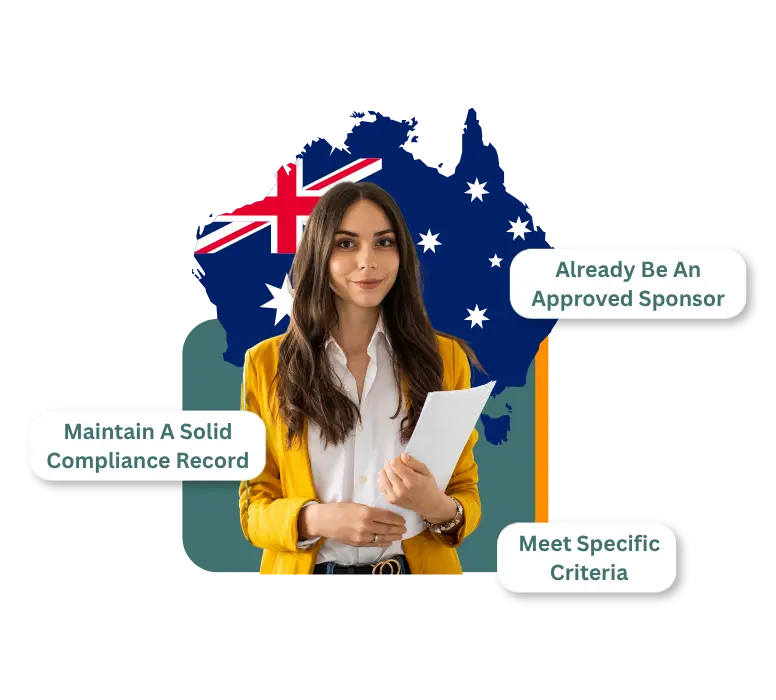
That’s a real advantage when you’re trying to fill a role in engineering, healthcare, or construction fields where delays carry real costs. Accredited sponsorship in Australia applies to the Skills in Demand visa (Subclass 482) and the Skilled Employer Sponsored Regional visa (Subclass 494). Both are widely used by Australian employers bringing in overseas talent. The accreditation status lasts five years, matching the standard business sponsorship period. You can apply for it alongside a new Standard Business Sponsorship (SBS) application, or at any point during an existing one. The criteria are specific, but they’re not out of reach for businesses that already run a clean sponsorship program.
What Is Accredited Sponsorship in Australia?
Accredited sponsorship in Australia is a status given by the Department of Home Affairs to employers who are already approved Standard Business Sponsors and have consistently met their sponsorship obligations.
Standard Business Sponsorship is the starting point that gives you access to the employer-sponsored visa system. Accredited status builds on that. It tells Home Affairs that your business has a strong track record, and in return, you get faster, less complicated access to the same programs. Once accredited, your nominations and visa applications for the Skills in Demand visa (Subclass 482) and the Subclass 494 visa are prioritised. Processing times that normally stretch to months can drop significantly.
Standard vs Accredited Sponsorship: What's the Difference?
Feature | Standard Business Sponsor | Accredited Sponsor |
Processing priority | Normal queue | Priority and streamlined |
Police certificates required | Yes, from all countries | Sponsor can vouch for character |
Labour market testing ads | External job boards only | Can use own business website |
Visa programs covered | 482, 494, 186 | 482, 494 (priority); 186 unaffected |
Streamlined nomination provisions | No | Yes, for low-risk nominations |
Duration | 5 years | 5 years |
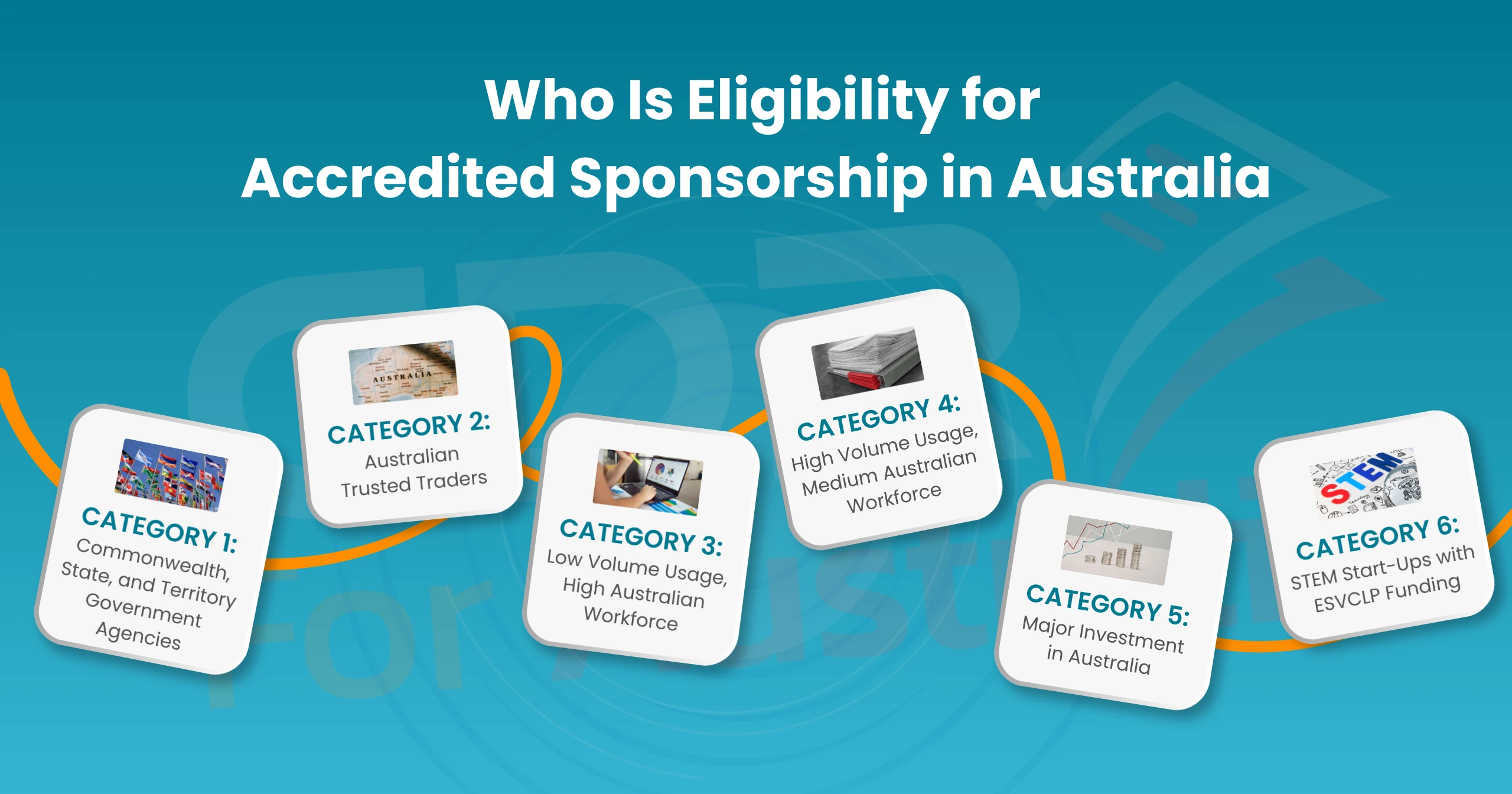
Who Is Eligible for Accredited Sponsorship in Australia?
Your business must be an approved Standard Business Sponsor, or applying for SBS at the same time. From there, you need to fit into at least one of the six eligibility categories set by the Department of Home Affairs.
Category 1: Commonwealth, State, and Territory Government Agencies
Federal, state, and territory government bodies qualify here. At least 75% of the agency’s Australian workforce must be Australian workers. Because government entities already operate under significant oversight, the verification process is generally simpler.
Category 2: Australian Trusted Traders
This applies to businesses that hold active Australian Trusted Trader (ATT) status through the Australian Border Force. ATT recognises businesses with secure supply chains and strong trade compliance. Holding ATT status alone isn’t enough; the business must also have at least 75% Australian workers, written NES-compliant contracts for all visa holders, and Australian employees paid in line with an Enterprise Agreement or salary table reflecting market rates.
Category 3: Low Volume Usage, High Australian Workforce
For businesses that don’t use the sponsorship program heavily but employ a high proportion of Australians. At least 85% of the Australian workforce must be Australian workers. The business cannot be a sole trader or partnership. Annual turnover must be at least AUD 4 million over the last two years, with at least one year as an approved SBS. At least one SID or 482 nominations must have been approved in the last two years , and the nomination non-approval rate must be below 3%. No adverse monitoring outcomes, NES-compliant contracts for all visa holders, and market-rate pay for all Australian employees are also required.
Category 4: High Volume Usage, Medium Australian Workforce
For businesses with a more active sponsorship history. At least 75% of the Australian workforce must be Australian workers. The business must not be a sole trader or partnership, must have an annual turnover of at least AUD 4 million for the last two years, and must have been an approved SBS for at least two years. At least 10 SID or 482 nominations must have been approved over the past two years, with a non-approval rate below 3%. Same requirements apply for monitoring outcomes, contracts, and pay.
Category 5: Major Investment in Australia
For businesses that have made a large financial contribution to the Australian economy. A direct investment of at least AUD 50 million that has created local jobs is required. The business cannot be a sole trader or partnership, must have been an SBS for at least one year, and must have had at least one 482 nominations approved in the past year. Non-approval rate must be under 3% over the last two years, with no adverse monitoring outcomes and compliant contracts and pay in place.
Category 6: STEM Start-Ups with ESVCLP Funding
A newer category for early-stage innovation businesses. The business must be developing unique STEM products or services and must have received venture capital funding from an Early Stage Venture Capital Limited Partnership (ESVCLP) registered fund within the last two years. Standard compliance requirements apply no adverse monitoring outcomes, NES-compliant contracts, and market-rate pay.
Outside these six categories, a discretionary pathway also exists for associated entities of accreditation-eligible businesses, companies going through corporate restructures, and larger partnerships in fields like law or medicine.
Key Benefits of Accredited Sponsorship in Australia
The most direct benefit of accredited sponsorship in Australia is speed. Your 482 and 494 nominations go to the front of the processing queue. For low-risk nominations, some requirements can be met through a certification on the form itself rather than a full evidence package with less work, faster outcomes.
Overseas police clearance certificates are not required from sponsored employees. You can provide a written character reference on their behalf instead. That alone can save weeks on individual applications. Accredited sponsors can also use their own website as a valid labour market testing platform, which standard sponsors cannot do.
How to Apply for Accredited Sponsorship in Australia
The application goes through ImmiAccount, the same platform used for Standard Business Sponsorship.
First, confirm which category applies to your business. Each one requires different evidence. You’ll typically need payroll records showing your Australian workforce percentage, nomination history, compliance records, salary data, and employment contracts for current visa holders. Lodge the application as a variation to your existing SBS, or as part of a new SBS application. Processing usually takes one to two months.
Once approved, you need to keep meeting your category requirements for the full five-year period. If your workforce ratio drops or your compliance record slips, the status can be revoked. For roles requiring a skills assessment, a common step for engineers and technical professionals must be completed separately before a migration skills assessment and nomination can proceed.
Ongoing Obligations You Need to Know
Accreditation adds to your obligations, not replaces them. Visa holders must be paid at least the same as equivalent Australian workers in the same role and can only work in their nominated occupation. Any business changes, restructures, redundancies, or a visa holder leaving early must be reported to Home Affairs. Return travel costs for a sponsored worker whose employment ends are your responsibility. Sponsorship costs cannot be passed on to the worker.
Home Affairs carries out site visits and audits. If accreditation is revoked, you drop back to Standard Business Sponsor level. The SBS approval stays, but priority processing stops immediately.
What Happens After Nomination Is Approved?
Once your nomination clears, the visa applicant lodges their own application separately. Accredited sponsors are treated as lower-risk, so the visa stage typically moves faster too.
For workers on the Skills in Demand (482) visa, accredited nominations generally mean a smoother process overall. For employees working toward permanent residence, you can check the 186 visa processing time for an idea of timelines. For regional roles, the 494 visa processing time is also shorter when the nomination comes from an accredited sponsor.

Looking for expert CDR Writer for Engineers Australia?

Creating a CDR Report may be difficult due to Engineers Australia’s standards and rules ( EA ). Our experienced engineers have assisted many people in obtaining approval for their report from the EA via the use of powerful projects.
Common Reasons Applications Get Delayed or Rejected
Workforce data causes the most problems. Payroll records need to cover the right period and count all Australian workers correctly. If numbers are unclear, Home Affairs will request more information.
Nomination approval rates are another common issue. A non-approval rate above 3% blocks eligibility for Categories 3, 4, and 5. Even one or two refused nominations in a short window can push you over. Employment contracts are scrutinised too. They need to actually meet National Employment Standards, not just reference them. Paying a visa holder below market rate is both a compliance breach and a reason to reject the application outright. Finally, make sure your SBS is active or being applied for at the same time accreditation cannot exist without it.
Where Skills Assessment Fits Into This Process
For many employer-sponsored roles especially in engineering, IT, and some trades the overseas worker needs a positive skills assessment before a nomination can be lodged. This runs entirely separately from the sponsorship process, but it directly affects your timeline.
Engineers typically need to complete a Competency Demonstration Report (CDR), assessed by Engineers Australia. The CDR demonstrates that qualifications and work experience meet Australian standards. A poorly prepared CDR can come back unsuccessful, which means starting again and losing months.
At CDR for Australia, we help engineers prepare at this stage structuring the CDR correctly, writing career episode narratives, and getting the supporting documents right. When your employer already has accredited status and faster processing in place, a delayed skills assessment is the last thing you need. Our CDR writing services are built to help you move through this stage without setbacks.
Frequently Asked Question (FAQs)
How do I become an accredited sponsor in Australia?
You need to be an approved Standard Business Sponsor first, then apply through ImmiAccount under one of the six eligibility categories. Your business must have a clean compliance record, the right Australian workforce percentage, and meet the financial and nomination history requirements for your chosen category. Processing usually takes one to two months.
What is an accredited sponsor for a 482 visa?
An accredited sponsor is an employer that has been granted a higher-trust status by the Department of Home Affairs. When they nominate someone for a Skills in Demand (Subclass 482) visa, that application gets priority processing ahead of nominations from standard business sponsors. It also means less documentation and no overseas police certificates for the visa applicant.
Which sponsorship visa is good for PR in Australia?
The most common pathway to permanent residence through employer sponsorship is the Employer Nomination Scheme (ENS) Subclass 186 visa. Many workers come in on a 482 visa first, then transition to the 186 once they meet the eligibility requirements. You can check the current 186 visa processing time if that’s the route you’re working toward.
Can I apply for PR after 2 years on a 482 visa?
It depends on your stream. Under the Skills in Demand visa, workers on the Core Skills pathway may be eligible to apply for the 186 visa after two or three years of work with the same employer, depending on the occupation and nomination conditions. Your employer’s compliance record including whether they hold accredited sponsorship in Australia can affect how smoothly that transition goes.
Can a small business get accredited sponsorship in Australia?
Yes, but the thresholds are specific. Category 3 is the most realistic option, you need at least 85% Australian workers, AUD 4 million in annual turnover, and a clean nomination record. Sole traders and standard partnerships are excluded, though large professional partnerships in law or medicine may qualify through the discretionary pathway.