


RPL Pathway for Engineers Australia: Eligibility and Application Guide
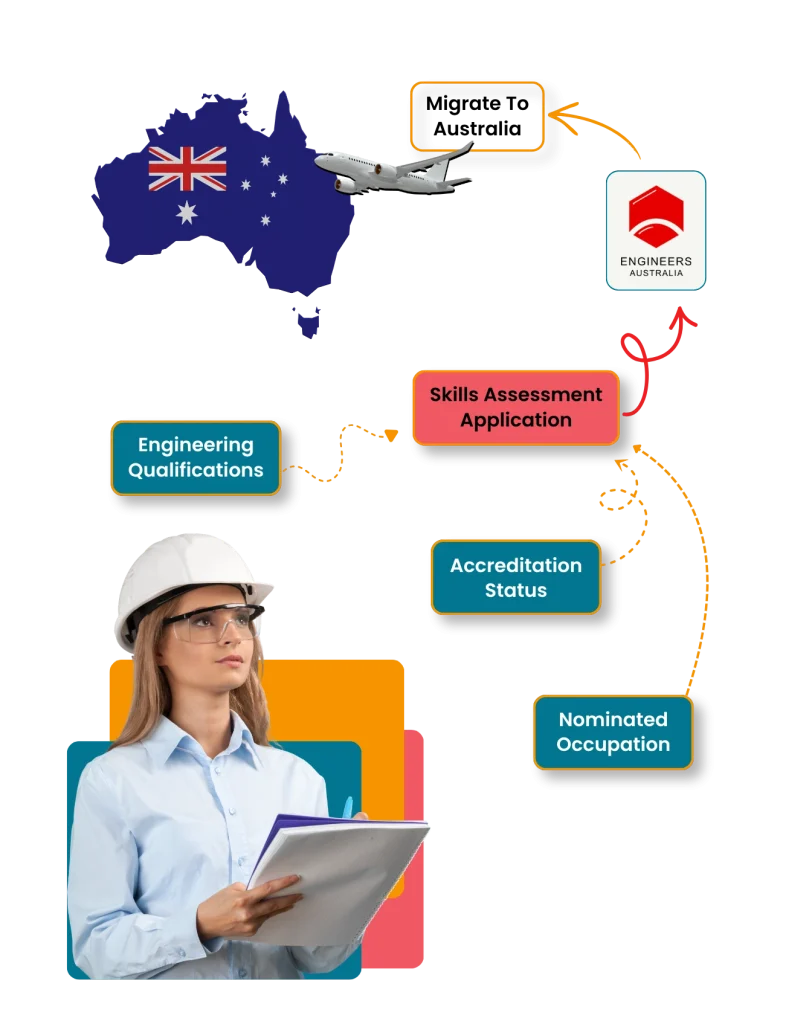
Knowing the Australian (EIT) RPL Pathway Engineers Australia requirements is an essential part of developing your skills assessment application if you are intending to migrate to Australia as an engineer. The selection of the assessment pathway is reliant on your engineering qualifications, accreditation status and nominated occupation, however.
Engineers Australia (EA) is the official assessing body for numerous engineering professions listed as occupations under the skilled migration program. Applicants with qualifications that are not recognised by an international engineering agreement may require to submit a Competency Demonstration Report (CDR) to prove their engineering knowledge and skills.
What Is the RPL Pathway for Engineers Australia?
Sometimes the applicant is searching for a way to achieve a formal recognition of the engineering knowledge gained by their education, experience and competencies in their profession and is using the term RPL Pathway Engineers Australia to identify this.
But there are two modes of assessment to be distinguished.
Recognition of Prior Learning (RPL) is an assessment technique that can be employed by qualified Education and Training Providers to determine whether knowledge and skills have been acquired from an education and/or training programme, employment, training and/or other relevant learning experiences. It can assist an applicant to gain credit for an Australian qualification.
Another migration skills assessment pathway available is Engineers Australia’s Competency Demonstration Report (CDR) pathway. It assesses an applicant’s knowledge and skills in engineering and considers them as relevant to the nominated engineering occupation and to the standards for it.
If you are looking to do an Engineers Australia migration skills assessment, you should find out if a CDR pathway is suitable for your qualifications before deciding that an RPL application is sufficient.
Please check the official Engineers Australia migration skills assessment requirements before proceeding.
Who Needs the Engineers Australia CDR Pathway?
Candidates not eligible for an appropriate accredited pathway may be eligible for the CDR pathway.
Engineers Australia’s published guidance states that the CDR pathway can be used by applicants who:
- Have an engineering certificate that is not a member of the appropriate international engineering accords.
- Have a provisionally accredited Australian engineering qualification.
- Desire to have consideration for a job in engineering that is not their accredited qualification title.
- Possess a qualification or qualifications that show the underpinning knowledge related to their nominated engineering occupation.
This will depend on your individual situation. If a student fits into one of these descriptions, it does not automatically mean that they will receive a positive assessment.
1. Engineers With Non-Accredited Qualifications
You might have to use the CDR pathway if your engineering qualification is not recognised under the international accreditation system for this profession.
For instance, if an engineer has obtained a degree from a foreign country, he or she will want to determine whether their engineering degree and/or graduation year are accredited by the appropriate standards.
It is not an indicator of accreditation whether or not a degree has been obtained in another country.
2. Applicants With Provisionally Accredited Qualifications
Depending on the Engineers Australia requirements, applicants with provisionally accredited Australian engineering qualifications may be required to go through the CDR pathway.
Please ensure that you have completed your qualification before you apply.
3. Applicants Seeking Assessment for a Different Engineering Occupation
The nominated occupation needs to be related to your engineering knowledge, skills and competence.
The CDR pathway may be appropriate if your occupation is different to the title of your accredited qualification.
Be sure to look closely at occupation requirements before choosing assessment category.
4. Engineers With Qualifications From Countries Without Applicable Accreditation Recognition
Engineers who have not finished their education in a recognised accreditation arrangement (RAA) that meets the requirements may have to demonstrate their competency via the CDR pathway.
What is important is if your specific qualification meets the requirements of an alternative pathway.
Not all overseas engineering degrees may require a CDR for registration. First, review the appropriate assessment options.
Eligibility Requirements for the Engineers Australia RPL and CDR Pathway
Evaluate your qualifications, career objectives and documents before you begin your application.
Eligibility for Engineers Australia migration skills assessment should be considered based on the Engineers Australia pathway requirements and not the terminology RPL Pathway Engineers Australia.
Relevant Engineering Qualification
Applicants should have an appropriate engineering qualification or combination of qualifications that can be assessed against the requirements of the nominated occupation.
Before applying, make sure to have your degree certificate, academic transcripts and other educational documents ready.
If your qualifications are not in English you should verify Engineers Australia’s English language requirements at present.
Appropriate Engineering Occupational Category
Engineers Australia evaluates applicants in four general occupational groups:
- Professional Engineer
- Engineering Technologist
- Engineering Associate
- Engineering Manager
Your occupation should match your skills and abilities.
Choosing the wrong category can result in delay or failure of the assessment.
Evidence of Engineering Knowledge and Competencies
For the CDR pathway, applicants need to show the engineering skills applicable to their nominated occupation.
You should demonstrate your engineering knowledge and technical work, problem-solving skills, and professional judgement in your evidence.
This could include Career Episodes and a Summary Statement, depending on the requirements that are applicable to your application.
Identity and Supporting Documents
All necessary identification and supporting documents for your specific assessment pathway must be presented.
Please read the Engineers Australia application guidance carefully, as the specific papers required are dependent on the type of assessment and individual circumstances.
English Language Requirements
Applicants will need to meet the required English language competency requirements.
Please ensure that you refer to the current Engineers Australia guidelines for acceptable evidence, exemptions and any appropriate requirements for your application.
Important: The eligibility will be based on the requirements at the time of application. Check everything according to the latest official recommendations, and not only by relying on third-party articles.
Documents Required for an Engineers Australia CDR Application
When you prepare your documents in advance before you begin the application, they may help to avoid unnecessary delays.
It depends on the application. The following checklist lists some common documents and preparations that should be considered.
Document or Evidence | Purpose |
Passport or other accepted identity documents | Establishes your identity |
Engineering degree certificate | Confirms your awarded qualification |
Academic transcripts | Provides details of subjects and academic results |
Curriculum vitae or résumé | Summarises your education and professional background |
Career Episodes | Demonstrates your individual engineering competencies, when required |
Summary Statement | Maps relevant competencies to your Career Episodes, when required |
English language evidence | Demonstrates compliance with applicable requirements |
Employment references and supporting records | Supports relevant employment claims where applicable |
Certified translations | Makes documents understandable when the original language is not accepted |
Additional supporting documents | Addresses other requirements applicable to your assessment |
The following is a preparation checklist and is in no way a replacement for the official document list. Verify that what you need for your pathway is required.
Why Is Supporting Evidence Important?
You should make your application look consistent, credible and reliable with respect to your academic record, working experience and engineering skills.
If employment experience must be included as part of a claim, make sure supporting documents back up the information you include.
For instance, your employment history must match the dates, positions and responsibilities you’ve listed in your application.
Avoid giving false or unverifiable experience or information.
How to Apply Through the Engineers Australia CDR Pathway
If you have determined that the CDR pathway is the right one for you, follow a structured application process.
Step 1: Check Your Engineering Qualification
First, check your engineering degree, country, type, accreditation and graduation year.
Engineers Australia offers details about their recognised pathways and referral links to accreditation resources for qualifications.
You may be able to choose a different pathway if your qualification is accredited under an applicable agreement.
Ensure you are eligible before you start an application for a CDR.
Step 2: Select Your Engineering Occupation
Identify the best match for your qualifications and competencies in engineering occupations and occupational categories.
Consider occupational descriptions and competency expectations prior to selection.
The job you want to do should come from your engineering experience and not just because you think you’ve heard it’s a pretty cool job to be able to move to Australia for.
Step 3: Review the Current Application Requirements
Follow the most recent Engineers Australia migration skills assessment guidance.
Determine documents, competency evidence, English language requirements, and ethical standards that apply to your application.
Prepare an inventory and have all the documents ready for final submission.
Step 4: Prepare Your Career Episodes
If Career Episodes are required, each episode is to reflect your individual engineering and decision making.
A Career Episode can be an academic project, an engineering assignment, or may be work related that pertains to an engineering assignment, provided it meets the requirements.
Pay attention to the following elements:
- Background of the project and objectives.
- The particular duties and responsibilities you have.
- The engineering problem/challenge you solved.
- The techniques/procedures, formulas, instruments, or other technical principles you used.
- Actions taken and why.
- What your work and outcomes were.
Be clear about your personal contribution. Do not describe what a whole team does without giving any indication of what you actually do.
Your Career Episodes should be realistic, factually plausible, and reflect your supporting evidence.
Step 5: Prepare the Summary Statement
The Summary Statement links the elements of the competency to specific paragraphs in your Career Episodes (where required).
Check your nominated engineering occupation competency requirements.
For each competency, mark the paragraphs that show the application of the required knowledge and/or skills.
Read all references thoroughly. A competency claim is more likely to be useful if the source material explicitly mentions it.
Step 6: Review Your Documents
Make sure that your application is complete and consistent before it is submitted.
Verify that:
- All documents have the same name and include your personal information.
- Your education details are correct and you have completed your education on the correct dates.
- Your Career Episodes illustrate your own work.
- You refer to the correct paragraphs in your Summary Statement.
- Your supporting documents are up-to-date.
- No copied content is included in your application that is marked as your own.
- All necessary translations and supporting documents are provided.
Engineers Australia cautions against plagiarism, falsification of documents and false information. These matters may result in serious consequences such as rejection and limitations of future applications.
Step 7: Submit Your Application Online
Establish an Engineers Australia application account and complete the Engineers Australia online migration skills assessment process.Establish an application account with Engineers Australia online and complete the online migration skills assessment process.
Choose the right assessment route, fill in the information, upload your paperwork and pay the necessary fee.
Holding on to your confirmation and checking the application status via the respective portal.
Step 8: Respond to Any Requests for Additional Information
If Engineers Australia asks for clarification or further evidence, read and answer the request within the provided time.
Make sure your answer is relevant to the information asked for and any other documents provided are accurate and verifiable.
Preparation of the application before submission is important as there may be delays in submitting applications which are incomplete.
RPL Pathway vs CDR Pathway: What Is the Difference?
It is crucial to have an understanding of the difference between RPL and CDR when preparing an engineering assessment application.
Comparison | Recognition of Prior Learning (RPL) | Engineers Australia CDR Pathway |
Main purpose | Evaluates existing knowledge and skills for recognition within an education or training context | Assesses engineering competencies for a migration skills assessment |
Typical provider or authority | An eligible education or training provider | Engineers Australia |
Assessment focus | Competencies relevant to the units or qualification being assessed | Competencies relevant to the nominated engineering occupation |
Evidence | Depends on the RPL process and provider requirements | Includes the documents and competency evidence required by Engineers Australia |
Intended outcome | May result in recognition or credit towards a qualification | May result in a migration skills assessment outcome |
Migration assessment | Does not automatically provide an Engineers Australia migration skills assessment | Specifically used for the relevant Engineers Australia migration assessment process |
These processes cannot be substituted for each other.
If you wish to get an Engineers Australia Migration skills assessment you should start by determining the pathway you qualify for. Don’t consider that an RPL process with a training provider is a substitute for Engineers Australia assessment.
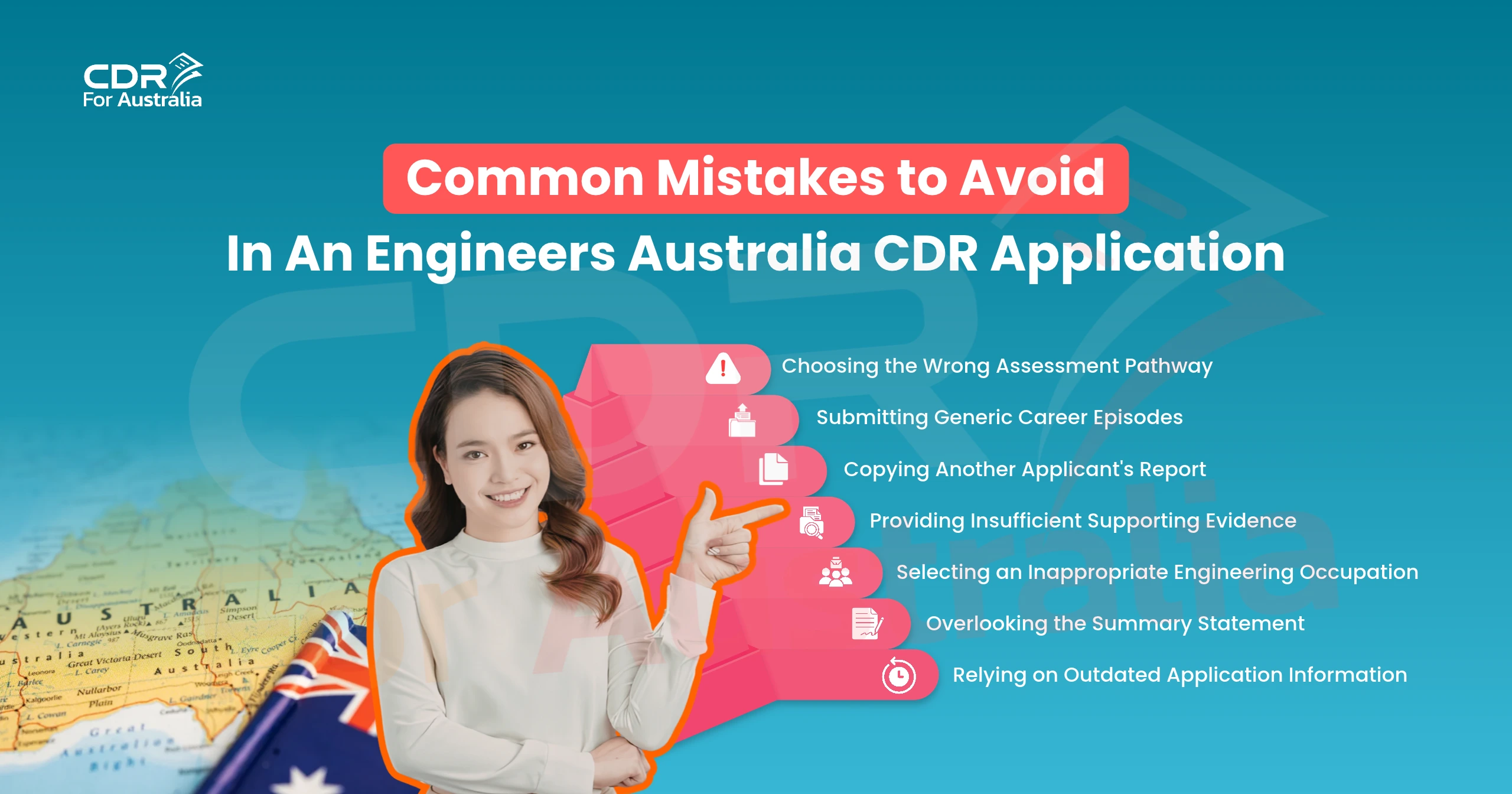
Common Mistakes to Avoid in an Engineers Australia CDR Application
While those who already have the requisite qualifications and engineering experience may face issues while preparing their applications.
To ensure your submission is of high quality and clarity, avoid these common mistakes.
Choosing the Wrong Assessment Pathway
Not all applicants require a CDR and an RPL process is not a requirement for Engineers Australia’s migration assessment.
How to prevent it: Ensure that you verify that you are qualified and accredited for the position you are applying for based on the latest official advice before starting a job application.
Submitting Generic Career Episodes
It can be hard for an assessor to see the engineering contribution of a generic description.
How to prevent it: Discuss the actual issues that were encountered, the approach taken, and decisions made.
Copying Another Applicant's Report
Submitting content that is copied from another applicant or using an applicant’s Career Episodes as your own may be in violation of Engineers Australia’s ethical requirements.
How to prevent it: Make original reports using your own knowledge and experiences from education and work. Make sure that technical details are correct in reflecting the work.
Providing Insufficient Supporting Evidence
The assessment process may be impacted if you miss a document or if your claims and supporting documents are inconsistent.
How to prevent it: Use the existing application checklist and ensure the information you present is backed up by documents.
Selecting an Inappropriate Engineering Occupation
The nominated occupation should reflect your proven engineering skills.
How to prevent it: Check the relevant occupational description and competency standards before applying.
Overlooking the Summary Statement
If a Summary Statement is required, the application will be weakened by incorrect paragraph reference or weak competency claims.
How to prevent it: Match each competency to the Career Episode paragraphs.
Relying on Outdated Application Information
Requirements, fees, processing procedures and rules regarding supporting documents may vary.
Avoidance strategies: Check the most recent Engineers Australia website and their new guidance on migration skills assessment before you apply.
How Long Does an Engineers Australia Skills Assessment Take?
The processing time varies depending on the assessment service, completeness of application and the circumstances of each case.
The published information from Engineers Australia has shown that it takes approximately 15 weeks to have standard applications assessed by an assessor. This is an assignment time frame and does not mean that a full assessment will be completed in 15 weeks.
Please refer to the latest official processing details before making an application – processing times can change.
To help minimise avoidable delays:
- Read through all the paperwork necessary before handing it in.
- Make sure that there is enough information in your application.
- Make sure your competency evidence is easy to read and understood.
- Be quick to respond to assessments authority’s requests.
- Track the status of your application on the official portal.
Don’t make migration or employment plans based on an educated guess time frame.
What Happens After a Successful Engineers Australia Assessment?
If you are successful in your application, Engineers Australia will send you a letter of outcome for your migration skills assessment.
This outcome may be used for appropriate migration purposes, in accordance with the requirements of the pathway to migration you plan to follow.
A positive skills assessment result however, does not mean that you will automatically be granted a visa, invited to apply or be eligible to work in Australia.
In addition, you are required to meet any relevant Department of Home Affairs requirements, such as the requirements relating to your nominated occupation, the visa eligibility requirements and other requirements.
If you are not satisfied with the result of your assessment, refer to Engineers Australia’s official statement on review and appeals.
How Can You Prepare a Stronger Engineers Australia Application?
Your application should be easy for an assessor to read and understand your qualifications, competencies and supporting information.
The following are some practical suggestions.
Know the assessment requirements first – find the right route, rather than spending time preparing documents.
Build authentic engineering contexts. Describe authentic engineering problems and personal involvement in solving them.
Use consistency, be sure your education, employment history and technical examples are consistent with your supporting records.
Justify your choices of engineering methods/approaches in your explanations rather than just providing tasks.
Evaluate all the competency claims. If a Summary Statement is required, make sure that every reference is relevant to the competency being claimed.
Adhere to the ethical guidelines. Your application should be your own knowledge, experience and work.
If you require help to understand what is required or to arrange supporting documents, you may need to get the right professional advice. No matter who prepares the info, it needs to be correct and reflective of your own experience.

Looking for expert CDR Writer for Engineers Australia?

Creating a CDR Report may be difficult due to Engineers Australia’s standards and rules ( EA ). Our experienced engineers have assisted many people in obtaining approval for their report from the EA via the use of powerful projects.
Final Thoughts on RPL Pathway for Engineers Australia
The first step in understanding the RPL Pathway Engineers Australia requirements is to determine which assessment process you’ll need to follow for your qualifications and professional objectives.
The CDR pathway might be the right option for applicants who do not meet the requirements for an applicable accredited pathway to Engineers Australia migration skills assessment. It must be well structured and organised according to Engineers Australia’s requirements for documents and competency evidence.
Make sure that you qualify before applying, choose the engineering occupation that you would like to apply for, check the requirements of documentation and ensure all claims are backed by authentic documentation.
To minimize needless delays and allow engineers to be evaluated on their abilities, a clear, complete, and accurate application is essential.
In the case of uncertainty about whether a CDR or different pathway is required for a qualification, start by checking the Engineers Australia migration skills assessment guidance. The first and foremost step is to decide on the right pathway to prepare a successful application.
Frequently Asked Question (FAQs)
Is there an RPL pathway for Engineers Australia?
If an engineer does not meet the criteria for an accredited pathway, the migration skills assessment pathway is referred to as the Competency Demonstration Report (CDR) pathway.
RPL is an approach that can be used by education or training providers who have already been qualified for the purposes of recognising prior learning and it is a separate process. If you are intending to undertake a migration skills assessment, refer to the Engineers Australia pathway requirements.
Who should apply through the Engineers Australia CDR pathway?
The CDR pathway can be considered by applicants who have engineering qualifications that are not accredited, are Australian qualifications (provisionally accredited), or are not from a pathway.
This pathway may be considered by applicants who wish to apply for assessment for an engineering occupation other than the one they have been accredited in.
This will be verified with the current official requirements.
Do I need work experience to apply through the CDR pathway?
Requirements are based on the assessment and the claims you will make.
Applicants should be prepared to show the skills needed and submit the necessary documents for their specific needs. For relevant skilled employment, supporting evidence of employment may be required.
Don’t assume that to work in an engineering role means someone has all of the necessary requirements.
What documents are required for an Engineers Australia CDR assessment?
Requirements vary according to individual circumstances and existing requirements.
Some of the common preparation items are degree certificates, academic transcripts, other supporting documents, and identity papers. Applicants who are required to provide competencies in a CDR also need Career Episodes and a Summary Statement.
Please always refer to the official document checklist for your assessment type.
Can I use an RPL certificate instead of a CDR?
An RPL certificate from an education/training institution is not a substitute for an Engineers Australia migration skills assessment.
The two processes have different purposes. Before making a decision, determine if your skills and experience align with a relevant Engineers Australia pathway.