


Portfolio Assessment for AACA Architecture in Australia
It’s not just about creating pretty architectural designs and drawings for an Australian skills assessment; it’s about preparing a portfolio. Your portfolio assessment should be well organised, with evidence of your architectural knowledge and project experience, and clearly show your design choices and relevant skills.
As part of the Architects Accreditation Council of Australia (AACA) Overseas Qualifications Assessment (OQA), we can help architects from overseas prepare their portfolios at CDRForAustralia. Our expertise is in coordinating your architectural work, showcasing your own work, mapping project evidence to the National Standard of Competency for Architects (NSCA), and preparing supporting documentation.
Whether your experience is from academic projects, professional practice, or a mix of both, we help you structure your current work into a coherent and organized portfolio for your planned pathway to assessment.
Looking to get some assistance in creating an architectural portfolio? Call CDRForAustralia to discuss your projects and prepare documents and requirements for your portfolio.

evidence, gain insight into your role and the link between your work and the performance criteria required.
What Is Portfolio Assessment for AACA Architecture?
The portfolio assessment process is a key component of the AACA Overseas Qualifications Assessment pathway and is an essential requirement to demonstrate architectural competency. It requires presenting a range of selected architectural projects and supporting evidence in such a manner that enables the assessor to understand your skills, knowledge, experience and professional contribution.
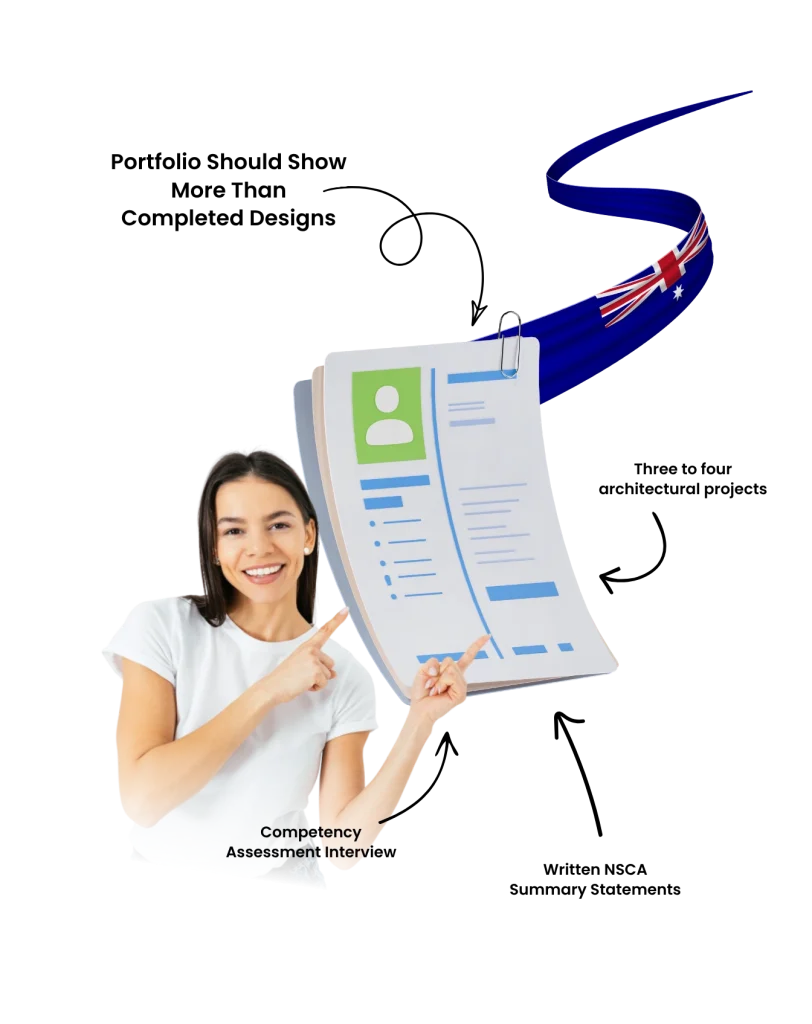
AACA is a competency assessment for new OQA applicants which involves a portfolio of three to four architectural projects, written NSCA Summary Statements and a Competency Assessment Interview. Individuals who have already taken a successful Stage 1 assessment prior to March 2022 may be able to apply for the Stage 2 pathway.
The portfolio should show more than completed designs; it needs to show evidence of the visual quality of the designs. It should make sense of the connection between your architectural education and your project experience and how it relates to the various competency requirements.
A well-organised portfolio will help you to better locate appropriate project
Why Is an Architectural Portfolio Important?
An architecture portfolio is a collection of evidence of your work that is submitted to show your style of architectural design and your other duties as an architect. It is especially important to ensure the presentation and relevance of evidence for applicants aiming for overseas qualification assessment.
Your investment portfolio can help to show:
- Design development: The process you used to develop concepts and consider alternatives and to develop architectural proposals.
- Technical knowledge: How drawings, specifications and technical considerations influenced projects.
- Problem-solving ability: Your response to design constraints; site conditions; and/or user requirements or technical challenges.
- Environmental aspects: How environmental performance and sustainability influenced decisions.
- Project co-ordination: How you co-ordinated with other professionals, consultants or stakeholders as appropriate.
- Communication skills: How you communicated design ideas and technical information in drawings, reports and presentations.
- Professional contribution: What project(s) you personally took on and what you did to help accomplish them.
Real evidence of projects, making it clear which portions of the project are your own and which are the contributions of other team members.
AACA Portfolio Requirements for Overseas Qualification Assessment
It is best to read the current AACA OQA Applicant’s Guide, templates and submission checklist before preparing your architectural portfolio. General portfolio design tips should be ignored in favour of the official requirements.
Include Three to Four Architectural Projects
AACA published requirements for the new applicant OQA pathway state that a portfolio containing 3-4 architectural projects is required. Please note that the portfolio should be based on the directions in the current Applicants Guide.
Choose projects that are relevant, in terms of the competencies being developed, and that have good evidence. Adding more projects does not necessarily increase the quality of the portfolio if they are the same information or do not show your personal contribution.
Include at Least One Complex Project
AACA must include at least one complex project, as defined in the Applicant’s Guide. It is possible for a medium- or larger-scale project if it fits the definition of an official project, depending on the project.
Select a project that will enable you to describe constructive choices, technical planning or design development in meaningful ways. The project should be presented with a degree of confidence, and should be supported by appropriate documentation.
Consider Including Your Final Architectural Thesis
AACA advises that a student’s architectural design thesis or student project be included, as it can be used as a basis for discussing educational competency during the Competency Assessment Interview.
Professional projects may also be used as permitted. The best project will be based on the evidence presented and your ability to show the competencies in the project.
Support Projects With Relevant Evidence
Project evidence for architecture may incorporate drawings, sketches and other artefacts applicable to the evidence of the competencies being demonstrated. Concept development, plans, sections and elevations, technical drawings, design reports and project records are examples of useful materials that may be included in a project depending on the project.
All items have a specified function. Do not include drawings or images that do not contribute to the presentation of a relevant skill or competency to the portfolio for the purpose of impressing the portfolio’s viewer.
Prepare NSCA Summary Statements
The following written NSCA Summary Statements must accompany the portfolio and address the topic areas and performance criteria: AACA’s published guidance comprises of 13 topic areas for the 2021 NSCA Summary Statements.
The following statements should correlate the competency requirements with evidence that is provided in the selected projects. They should describe what the evidence proves and where the assessor can retrieve the evidence.
Keep Your Information Consistent
Any project names, dates, responsibilities, qualifications, and descriptions should be consistent across the portfolio and supporting documents. Differentiate a project from an in-university or professional practice project and accurately describe your contributions.
Do not assume responsibility for work that has not been done by you or share any confidential data on projects without proper authorization.
How We Help With Architectural Portfolio Preparation
CDRForAustralia provides structured preparation support to enable you to prepare your existing architectural work and present relevant evidence clearly.
Project Selection and Organisation
We support you in reviewing the projects and documentation that you submit and identify any that may be helpful for your portfolio. This involves taking into account the complexity of the project, the variety of architectural activities included, and the skills it may be able to showcase.
The final choice should be based on the requirements of AACA and your assessment environment.
Architectural Project Presentation
We assist in preparing project information in a consistent structure to make it easier to understand what the project is, how it develops, the technical aspects, and the result.
The presentation may contain (if appropriate)
- Project title and overview
- Project type and context
- Your role and responsibilities
- Design brief and key constraints
- Concept development and design decisions
- Relevant architectural drawings and supporting documents
- Technical challenges and solutions
- Competency-related evidence
Use the material to reflect what you actually did and what the supporting material is.
NSCA Competency Mapping
We assist you in structuring your project evidence for each NSCA performance criteria. This process includes determining which projects have relevant evidence, choosing relevant supporting evidence, and clarifying connections between the evidence and the competency being measured.
It will be easier for your submission to be read and reviewed if you have a clear evidence trail. Competency mapping should be accurate and should not show an assumed criterion has been met when the evidence in support is not convincing.
NSCA Summary Statement Preparation
The NSCA Summary Statement must not just outline an architectural project. It should link the appropriate performance criteria to evidence in the portfolio.
We prepare with clarity, logical organization, suitable project references, and coherence between the summary statements and supporting documents.
Supporting Document Review
We can assist in checking the quality of the project materials, academic records, and evidence of relevant professional experience that is available. The exact documents needed will depend on the newest AACA application guidelines and your situation.
For the new-applicant pathway, AACA will need a detailed reference letter stating that the required minimum post-graduate architectural experience has been completed. The current official checklist should be used to guide your supporting evidence.
Interview Preparation Support
Competencies Assessment Interview is a critical component of the new applicant OQA process. Practise explaining your own work and the why of your design choices and the evidence presented.
This may involve looking at project descriptions, highlighting important technical and design decisions, and rehearsing explanations of your responsibilities and lessons learned.
Our preparation support is not a substitute for the official assessment or interview, nor will it ensure a favorable result.
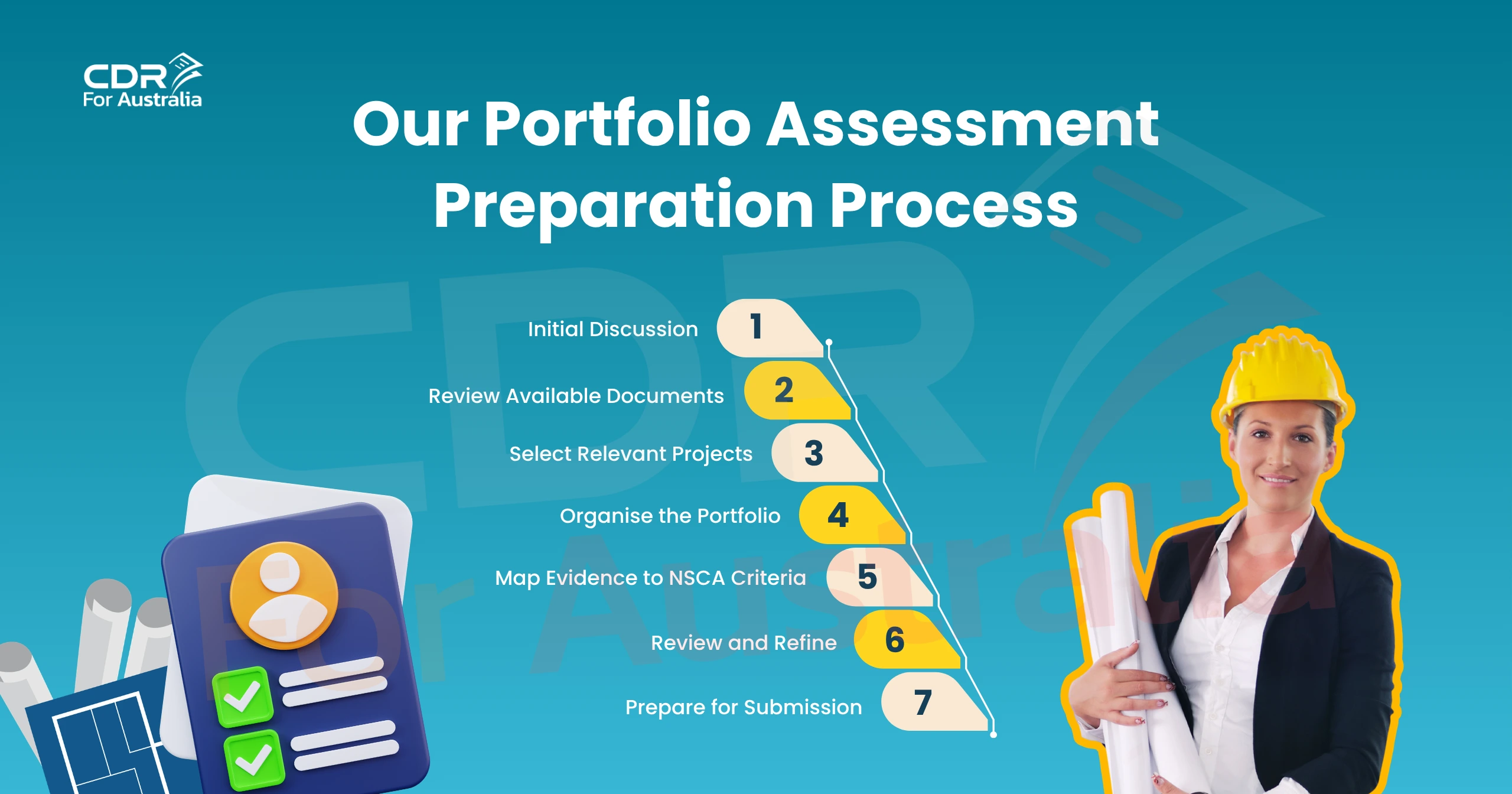
Our Portfolio Assessment Preparation Process
Step 1: Initial Discussion
Provide background on your architectural qualification, career history, and future path of evaluation, along with your current portfolio status. This will help you determine the extent of the preparation support that you may be required.
Step 2: Review Available Documents
Be sure to include the appropriate project documents and info that you’re allowed to include. You tell us what you’re preparing for, and we analyse the resources you have and the skills you need.
Step 3: Select Relevant Projects
Look for projects that could be a source of meaningful evidence of architectural knowledge and competency. The selection should meet the current AACA requirements, including the requirement for a complex project.
Step 4: Organise the Portfolio
Organize project information, drawings, and supporting evidence in an organized and logical manner. It is important for each project to have a clear goal in the overall portfolio.
Step 5: Map Evidence to NSCA Criteria
Link project evidence to relevant performance criteria, and sequence relevant NSCA Summary Statements.
Step 6: Review and Refine
Check the portfolio for clarity and completeness, with projects and information that correspond to the instructions for the present submission. Address content gaps if possible with real evidence to support content.
Step 7: Prepare for Submission
Use the current AACA Applicant Guide, official templates, and checklist to complete your final checks. It is your responsibility to ensure that your application is correct and follows AACA’s instructions.
Who Can Benefit From Portfolio Assessment Assistance?
Our architectural portfolio preparation service might be beneficial to you if you are in any of these situations:
- Architects with overseas qualifications preparing for the AACA OQA pathway.
- Architecture graduates who need to organise suitable academic project evidence.
- Experienced architectural professionals presenting evidence from completed projects.
- Applicants who need help connecting project evidence with NSCA Summary Statements.
- Applicants revising an existing portfolio to address feedback or improve its clarity.
- Applicants preparing to discuss their projects during the Competency Assessment Interview.
Suitability will be determined by the qualifications, experience, pathway, and the present AACA requirements. Portfolio preparation assistance cannot replace self-checking eligibility with AACA.
Common Architectural Portfolio Preparation Mistakes
Choosing Projects Only for Their Visual Appeal
The project can be impressive in appearance, but may not contain enough evidence of the competencies required on the form. Choose projects according to relevant evidence and to be able to explain his/her work.
Failing to Explain Your Individual Contribution
There should be clear evidence of your role, responsibilities, and decisions in team projects. Do not submit all the team’s work as your own.
Submitting Unsupported Competency Claims
Evidence needs to be provided for each competency statement. Statements of general design or technical competence are less helpful if they are not related to specific project content.
Treating the Summary Statement as a General Essay
The Summary Statement from NSCA should aid in linking specific performance criteria to evidence within the portfolio. It should not just be a restatement of the project description.
Ignoring Current AACA Instructions
The assessment requirements outlined in older templates or advice may not be current. Please refer to the most up-to-date official Applicants Guide and supporting documents prior to submitting – this is a must.
Using Inconsistent Project Information
Variations in project dates, roles, titles, and descriptions can make a submission more difficult to understand. Once these details have been reviewed throughout the portfolio and supporting documents, finalise it.
Why Choose CDRForAustralia for Portfolio Preparation?
Creating an architectural portfolio requires gathering pertinent information, organizing the content of the projects, and ensuring that the connection between the project and the assessment criteria is evident.
CDRForAustralia is based on a structured, evidence-led preparation process that can assist you to:
- Create a logical organisation of architectural projects.
- Communicate clearly your actual duties and contributions.
- Relate evidence of projects to the relevant NSCA standards.
- Enhance consistency of portfolio and supporting documents.
- Discuss any gaps that need more evidence or clarification.
- Be ready to articulate your work for the project in the evaluation process.
We’re here to help with documents and presentations. Eligibility, assessment needs, and outcomes are determined independently by AACA. No service provider can guarantee an assessment that is successful.

Looking for expert CDR Writer for Engineers Australia?

Creating a CDR Report may be difficult due to Engineers Australia’s standards and rules ( EA ). Our experienced engineers have assisted many people in obtaining approval for their report from the EA via the use of powerful projects.
Get Help With Your AACA Portfolio Assessment
Your architectural portfolio should show relevance to the work and be evidence of your experience, decisions and competency. You can present your work more effectively and plan for the next steps in the assessment process, with careful organisation.
Discuss your architectural portfolio preparation needs, project selection and support for the NSCA Summary Statement with CDRForAustralia.
First, check through your project documents and the existing AACA OQA Applicants Guide and prepare accordingly to the requirements.
CDRForAustralia is an independent document preparation service and not affiliated or endorsed by the Architects Accreditation Council of Australia (AACA). The assessment requirements and outcomes are the responsibility of the AACA, which is the official website of AACA for current instructions.
Frequently Asked Question (FAQs)
What is portfolio assessment for AACA?
AACA Overseas Qualifications Assessment competency process involves the presentation of selected architectural projects and supporting evidence to be assessed. New applicants will be required to submit three to four architectural projects, NSCA Summary Statements, and a Competency Assessment Interview.
How many projects should an AACA portfolio contain?
According to AACA published requirements for new applicants for OQA, 3 to 4 architectural projects of architecture are required, and a maximum of four can be accepted. All applicants are advised to refer to the latest Applicants Guide for detailed requirements.
Is a complex project required?
Yes. The published new applicant requirements by AACA include a minimum of one complex project. Check the Applicants Guide for the applicable definition of complexity.
Can I include my final-year architecture project?
AACA suggests the architect’s thesis, or a student project, be included as a supplement to the architectural design work, as it can serve as a good foundation for the dialogue about educational competency during the interview. Projects by eligible professionals may also be included.
What is an NSCA Summary Statement?
An NSCA Summary Statement links the NSCA performance criteria (from the National Standard of Competency) to the evidence in your portfolio for the projects. It aids in demonstrating the location and manner in which your work supports the competency being addressed.