


New Points System Australia: What Skilled Migrants Need to Know?
Skilled migration to Australia runs on points, not on who applies first. That’s the part a lot of applicants get wrong when researching the new points system Australia is reviewing right now. The Department of Home Affairs uses this points test to rank candidates for three visas: the Skilled Independent visa (subclass 189), the Skilled Nominated visa (subclass 190), and the Skilled Work Regional visa (subclass 491).

Age, English ability, qualifications, and work experience all get scored, then candidates are ranked against everyone else sitting in the SkillSelect pool. There’s a lot of talk right now about where the new points system Australia is heading in 2026 younger applicants getting more weight, higher English benchmarks, and a tighter focus on occupations that are genuinely short on workers. None of that has been written into law yet.
The current points test is still what gets used for every Expression of Interest submitted today. So before getting caught up in speculation about reform, it helps to understand how the existing test works, what the minimum score actually gets you, and which visa pathways use it. That’s what this article covers, along with a few practical ways to lift a score that’s sitting below where it needs to be.
What Is the New Points System Australia?
At its core, the points test is Australia’s way of ranking skilled applicants instead of processing them in the order they arrive. Points get awarded across a handful of categories, and only the top scorers in each round actually receive an invitation. The categories currently on the table are:
- Age
- English language proficiency
- Skilled employment experience
- Educational qualifications
- Australian study
- State or territory nomination
- Partner skills
- Regional study
- Community language (NAATI) credentials
You need to hit the minimum score before you can even lodge an Expression of Interest through SkillSelect. After that, whoever scores highest in a given occupation gets invited first, everyone else waits. This is really the whole point of understanding the new points system Australia debate: knowing where the rules stand today matters just as much as meeting the basic eligibility for your occupation.
Why Is the Points System Being Reviewed?
Migration settings in Australia get tweaked fairly often, but the points test itself hasn’t had a real overhaul since 2012. A government discussion paper published in 2024 found the current test doesn’t do a great job of picking applicants likely to contribute the most over the long run which, if you think about it, is kind of the whole point of having a points test in the first place. The direction being floated for the new points system Australia includes a few things:
- Rewarding occupation-specific skills instead of generic qualifications
- Weighting Australian work experience more heavily
- Prioritising applicants with strong English results
- Backing regional migration through dedicated pathways
- Recognising a partner’s skills and employability more fairly
The review itself took a while to get moving. A discussion paper went out, then a public submission window opened, and more than 200 responses came in from migration agents, industry groups, and applicants. That process usually means the outcome reflects broad input rather than a sudden change. It’s worth watching how factors like partner points or regional study credits get reweighted, since that’s where the real impact will land.
Minimum Points Required Under the New Points System
Right now, 65 points gets you into the pool. It does not get you an invitation. That gap trips people up constantly. Places are limited, invitations go to the highest scorers first, and in practice the competitive scores sit well above the minimum.
Occupation Demand Level | Typical Competitive Score |
Moderate demand occupations | 70–75 points |
High demand occupations | 80–90 points |
Highly competitive occupations (e.g., accounting, software engineering) | 90–100+ points |
Anyone digging into the new points system Australia is moving toward should treat 65 as a floor, not a goal. A higher score genuinely changes your odds, especially in occupations that pull in a large volume of applications every single round.
Invitation rounds don’t happen on a fixed schedule either. Some occupations, the ones known as pro rata occupations, get their invitations spread out gradually across the year instead of all at once. Accounting, software engineering, and civil engineering fall into this bucket often enough that applicants in these fields usually need to hold a strong score for months, sometimes longer, before anything happens. It’s frustrating, but knowing this upfront saves people from assuming a 65-point score means a quick outcome. It rarely does.
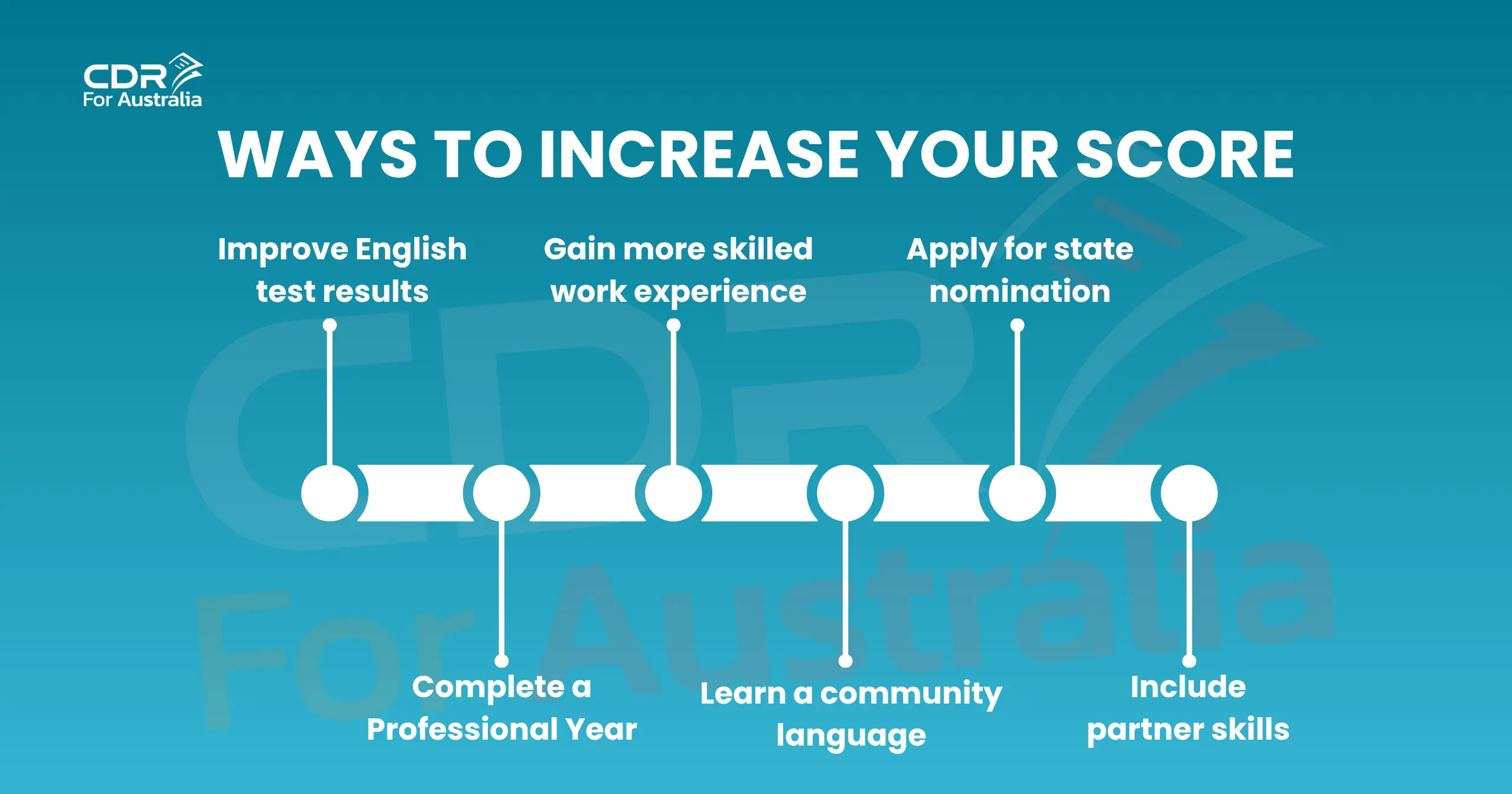
Ways to Increase Your Score
If a score falls short under the new points system Australia currently applies, there are a few realistic ways to close the gap:
- Improve English test results. Going from Competent to Superior English can add up to 10 additional points, sometimes more.
- Gain more skilled work experience. Extra years in a closely related role push you into a higher employment bracket.
- Apply for state nomination. States actively chase applicants in shortage occupations, and this adds points directly to your total.
- Complete a Professional Year. A reliable way for recent graduates to pick up extra points, especially in accounting, ICT, or engineering.
- Learn a community language. NAATI accreditation in an eligible language adds points and can genuinely help with employment prospects too.
- Include partner skills. A partner with a positive skills assessment and competent English can lift the household total.
It also helps to track what’s actually being invited, not just what’s published as the minimum. Looking at how invitation rounds under SkillSelect have played out over recent months gives a far more realistic picture than the headline 65-point figure ever will.
How Points Are Distributed Across Key Factors?
The table doesn’t reward general impressions of your profile. It rewards specific, measurable things. Here’s a simplified breakdown of the main scoring areas as they stand today.
Factor | Maximum Points Available |
Age (25–32 years) | 30 |
Superior English (IELTS 8 or PTE 79+) | 20 |
Skilled employment – Australian experience (8+ years) | 20 |
Skilled employment – overseas experience (8+ years) | 15 |
Educational qualification (PhD or equivalent) | 20 |
Australian study requirement | 5 |
State or territory nomination (subclass 190) | 5 |
Regional nomination (subclass 491) | 15 |
Partner skills | 10 |
Age carries the heaviest single weighting in the current test. Applicants between 25 and 32 get the full 30 points, and the score drops off gradually from there, you’ll generally be ineligible once you turn 45. English is the next big lever. Moving from Competent to Superior can add up to 20 points on its own, which is a lot for one category. Employment points work on a sliding scale too, and Australian experience is weighted more heavily than overseas experience. Combined, the two are capped at 20 points total, so once you hit that cap, extra years stop adding anything.
Visa Subclasses That Use the Points Test
Three visa categories rely on this scoring model, and they’re not interchangeable.
Skilled Independent visa (subclass 189):
No sponsorship, no nomination. This is the pathway everyone wants because you can live anywhere in the country. It’s also the most competitive by a wide margin.
Skilled Nominated visa (subclass 190):
You need a nomination from a state or territory government, which adds 5 points to your total. In exchange, you commit to living in that state for a set period.
Skilled Work Regional visa (subclass 491):
Nomination from a state, or sponsorship from an eligible relative already living regionally. This adds 15 points and leads to PR after three years.
If a state pathway looks like the more realistic option, it’s worth reading how South Australia state nomination actually works, since occupation lists and requirements can differ quite a bit from state to state.
Sample Points Calculation
Numbers make more sense with an example, so here’s one. Take an applicant with this profile:
- Age: 29 (maximum age points)
- Bachelor’s degree
- Superior English (IELTS 8)
- Five years of skilled overseas work experience
- Single, no partner points needed
- State nomination secured
Category | Points Claimed |
Age | 30 |
Bachelor’s degree | 15 |
Superior English | 20 |
Overseas skilled employment | 10 |
Single applicant | 10 |
State nomination | 15 |
Total | 100 |
A total of 100 puts this applicant well past the 65-point minimum, and comfortably ahead of the pack in most occupation categories, including the more competitive ones. It’s a good illustration of why anyone preparing for the new points system Australia currently uses should actually sit down and calculate every eligible category properly, rather than eyeballing a number and hoping it holds up.
The Role of Skills Assessment in Your Score
None of the qualification or employment points count for anything until you’ve got a positive skills assessment from the right authority. This step isn’t optional, and a lot of applicants underestimate how much weight it carries.
- Engineers apply through Engineers Australia
- IT professionals apply through the ACS skill assessment services
- Trades and a wide range of other occupations apply through VETASSESS
For engineers specifically, a well-written Career Episode does a lot of heavy lifting here, because assessors rely on it to check that your qualifications and experience genuinely line up with your nominated occupation. Without a positive outcome, you simply can’t claim qualification or employment points, no matter how strong the underlying work actually is.

Looking for expert CDR Writer for Engineers Australia?

Creating a CDR Report may be difficult due to Engineers Australia’s standards and rules ( EA ). Our experienced engineers have assisted many people in obtaining approval for their report from the EA via the use of powerful projects.
Common Mistakes That Reduce Points
A surprising number of applicants lose points, or end up with their claims questioned, over mistakes that were entirely avoidable. The usual suspects:
- Employment dates that don’t line up or are simply wrong
- Calculating age points at the wrong stage, it’s the invitation date that counts, not the EOI date
- Relying on an English test result that’s quietly expired
- Missing out on Professional Year eligibility altogether
- Turning down a state nomination without weighing what that actually costs you
- Work experience documentation that doesn’t clearly match the nominated occupation
A Resume Writing service that lays out work history clearly and consistently goes a long way toward avoiding these documentation issues, particularly for anyone claiming points across several different employers.
Why Does This Matters for Engineers and Skilled Workers?
Engineering keeps showing up near the top of Australia’s skilled occupation lists civil, mechanical, electrical, structural, mining, software, all of it. For these applicants, a strong score paired with a positive skills assessment is what actually gets you a realistic shot at an invitation. As the government keeps working through what the new points system Australia will eventually look like, staying on top of age brackets, English requirements, and occupation demand remains the most reliable way to plan a migration timeline.
Applicants who sort their documentation early, keep English scores current, and watch invitation trends tend to come out ahead, regardless of which version of the points test is running when they lodge.
Timing matters more than people expect. English results are valid for three years, and age points lock in at the time of invitation, not when the EOI first goes in. Someone approaching a birthday that drops them into a lower age bracket might be better off lodging sooner rather than waiting for more experience. Because the points table can shift between program years, it’s worth checking current settings before submitting anything.
You can check the official points calculator on the Department of Home Affairs website for the most current scoring settings before you submit an Expression of Interest.
Frequently Asked Question (FAQs)
Is Australia changing its points system?
Australia is reviewing its skilled migration points test, and several changes are under discussion for future rounds. The new points system Australia has proposed includes stronger weighting for younger applicants, higher English benchmarks, and closer alignment with occupations in genuine shortage. None of this has been legislated yet, so the current points test still applies to every Expression of Interest submitted today.
Can I get PR with 70 points in Australia?
Yes, technically 70 points clears the 65-point minimum, so you can lodge an Expression of Interest. Whether you actually get invited depends heavily on your occupation and how competitive that round turns out to be. Plenty of in-demand occupations are currently receiving invitations well above 70 points.
Is 75 points good for Australia PR?
It’s a solid score for a lot of occupations, particularly through state-nominated or regional pathways. For the more competitive fields, like software engineering or accounting, you may still need to push higher to actually receive an invitation.
Is 90 points enough for PR in Australia?
Generally, yes. A score of 90 is considered strong and competitive across most occupation categories, and applicants at this level are usually well placed for an invitation, even in the high-demand groups where competition is toughest.
What is the minimum score required to apply for the New Points System?
The minimum to lodge an Expression of Interest is 65 points. That’s the floor, not a guarantee places are limited, and invitations go to the highest-ranking applicants first in each round.
How are age points calculated in the New Points System?
Age points get locked in at the time of invitation, not when the Expression of Interest is first submitted. Applicants aged 25 to 32 currently get the maximum age points, and the score gradually reduces after that. Eligibility generally ends once you turn 45.
Do IT professionals score well under the New Points System?
Often, yes. ICT occupations show up regularly on skilled occupation lists, and applicants in this space can claim points for qualifications, skilled employment, and English proficiency. The final score still comes down to the individual profile and how competitive that occupation is at the time.
Can international students benefit from this New Points System?
They can. Completing an eligible qualification in Australia earns Australian study points, and a lot of graduates also complete a Professional Year or go through a skills assessment to build up their score before lodging an Expression of Interest.