


NER Registration Australia: Requirements, Process & Professional Support
Do you want to get NER Registration in Australia? The National Engineering Register (NER) is a nationally recognised means for expressing engineering qualifications, professional experience, competency and professional commitment.
The NER was set up by Engineers Australia to mark engineering professionals with defined standards of skill, qualification and professionalism. The register includes Professional Engineers, Engineering Technologists and Engineering Associates.
If you are an Engineer wanting to be registered with NER, it is important that you put the time in to ensure that your Professional Experience, Competencies, CV and supporting evidence are all completed and prepared carefully. The CDR for Australia team can offer professional assistance to aid engineers in grasping the NER requirements, arranging their application documentation, and getting ready for the assessment procedure.
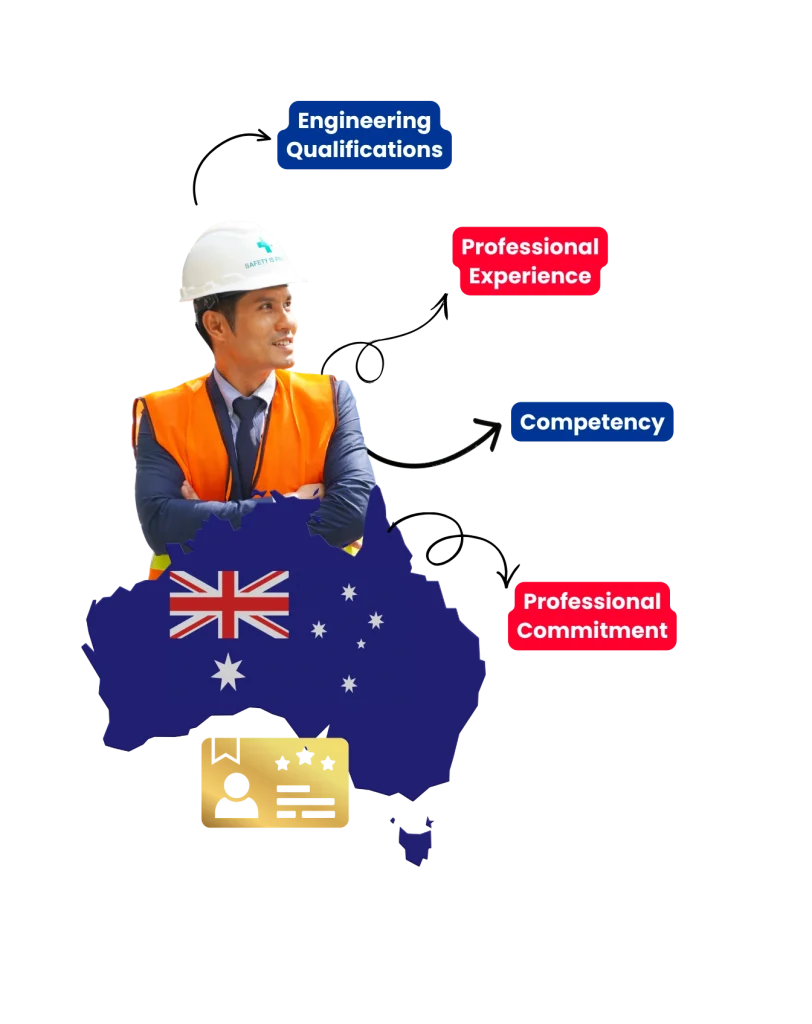

What Is NER Registration?
The National Engineering Register (NER) is a registration system that is managed by Engineers Australia. It contains a publicly accessible database of engineers who are able to show their competency and experience against Engineers Australia’s requirements.
For engineers, NER Registration can serve as a means to assert their professionalism in the eyes of employers, clients, and others. R.E. may use the NER credential, and they can also put a digital NER badge on Credly.
NER is not the same as statutory engineering registration, which is provided by each Australian state or territory. The location and requirements for statutory registration are at the discretion of state and territory governments.
Engineers should be knowledgeable about their NER needs and any other registration requirements of their intended practice area.
Who Can Apply for NER Registration?
Engineering professionals who qualify against Engineers Australia’s eligibility requirements are eligible for NER Registration.
Applicants generally need:
- An Engineers Australia-recognised engineering qualification,
- Successful completion of Engineers Australia Migration Skills Assessment or Membership Competency Assessment.
- A minimum of 5 years’ full-time-equivalent engineering experience with a focus on the projects pertinent to the position.
- Minimum 4 years’ postgraduate engineering experience
- Experience in the last 10 years in the field relevant to the programme.
- Evidence of the necessary NER competencies.
An important benefit for international engineers is that they do not have to be members of Engineers Australia to apply for an NER credential. The application of non-members must satisfy the above requirements and evidence and be submitted.
NER Registration Requirements
Knowing what is needed prior to beginning your application can make it much easier.
Recognised Engineering Qualification
Must have an appropriate Engineering qualification recognised by Engineers Australia.
If your qualification isn’t recognised by the appropriate international agreements, you might require an Engineers Australia assessment. Engineers Australia also indicates that a successful migration skills assessment may lead to advancement towards membership and NER registration.
Relevant Engineering Experience
The NER applicants should have a minimum of 5 years of full-time equivalent (FTE) engineering experience with at least 4 years of postgraduate experience in the last 10 years.
The experience should relate to your nominated engineering area and show a progression in the development of your professional responsibilities, technical knowledge, decision-making and practical engineering skills.
NER Competencies
Applicants will be required to exhibit the five NER competency areas.
Your experiences in the profession should demonstrate the application of engineering knowledge in a practical context and not merely your job duties.
Your evidence will show that you can explain:
- Problems encountered in engineering
- Your responsibilities
- Use of technical skills and knowledge in practice
- Solutions you developed
- Decisions you made
- Actions you took
- Outcomes achieved
- Professional responsibilities
- The activities of communication and management.
A good application will relate the experience directly to competencies, rather than giving generic descriptions of work.
Professional Referees
Two suitable referees are required for NER applications, who can attest to the applicant’s recent professional engineering experience.
Engineers Australia says that the typical referee will be a Chartered Member of Engineers Australia, an engineer registered by the NER, or an engineer with over five years
post-graduate engineering experience. They should also have a recent professional relationship with the applicant and know the applicant’s engineering work.
Appropriate referees are then an important component in the preparation of the NER application.
Documents Required for NER Registration
Thorough documentation preparation can lower the chances of delays or shortcomings in your application.
Depending on the pathway for assessment, membership documents may contain:
- Photo identification
- Detailed professional CV
- Engineering qualification documents
- Academic transcripts
- Qualification papers; testamur
- Engineers Australia Migration Skills Assessment outcome (as appropriate)
- Competency assessment outcome required for membership, if applicable
- Details of the two pro referees.
- Professional experience information
- Evidence for NER competencies
There are additional documents required of non-members than Engineers Australia members. For each pathway of the application, Engineers Australia has the definitive document requirements.
NER Registration for Overseas Engineers
This may be of special interest to engineers who qualified without being trained in Australia.
A first step overseas-qualified engineers should take is to check if their qualification is recognised by Engineers Australia or if a requirement for an assessment exists.
Engineers who want to relocate to Australia may find that the Engineer Accreditation Migration Assessment (EAMA) offered by Engineers Australia is a good path towards membership and NER registration.
However, having a successful migration skills assessment does not automatically mean that you are registered on the NER. It is still necessary to meet all the appropriate NER requirements and to register for the relevant section.
It is significant for engineers who are thinking about NER as a part of their engineering career in Australia.
NER Registration Fees
The following fees are now published by Engineers Australia:
Application | Fee |
NER assessment – Member | AUD $410 |
NER assessment – Non-member | AUD $670 |
Annual NER fee – Member | AUD $130 |
Annual NER fee – Non-member | AUD $215 |
All fees listed are inclusive of GST. Engineers Australia says the assessment fee is valid for the rest of the membership or financial year, after the candidate is registered with NER.
Applicants should check the actual fee with Engineers Australia before applying as it may vary.
NER Registration Process
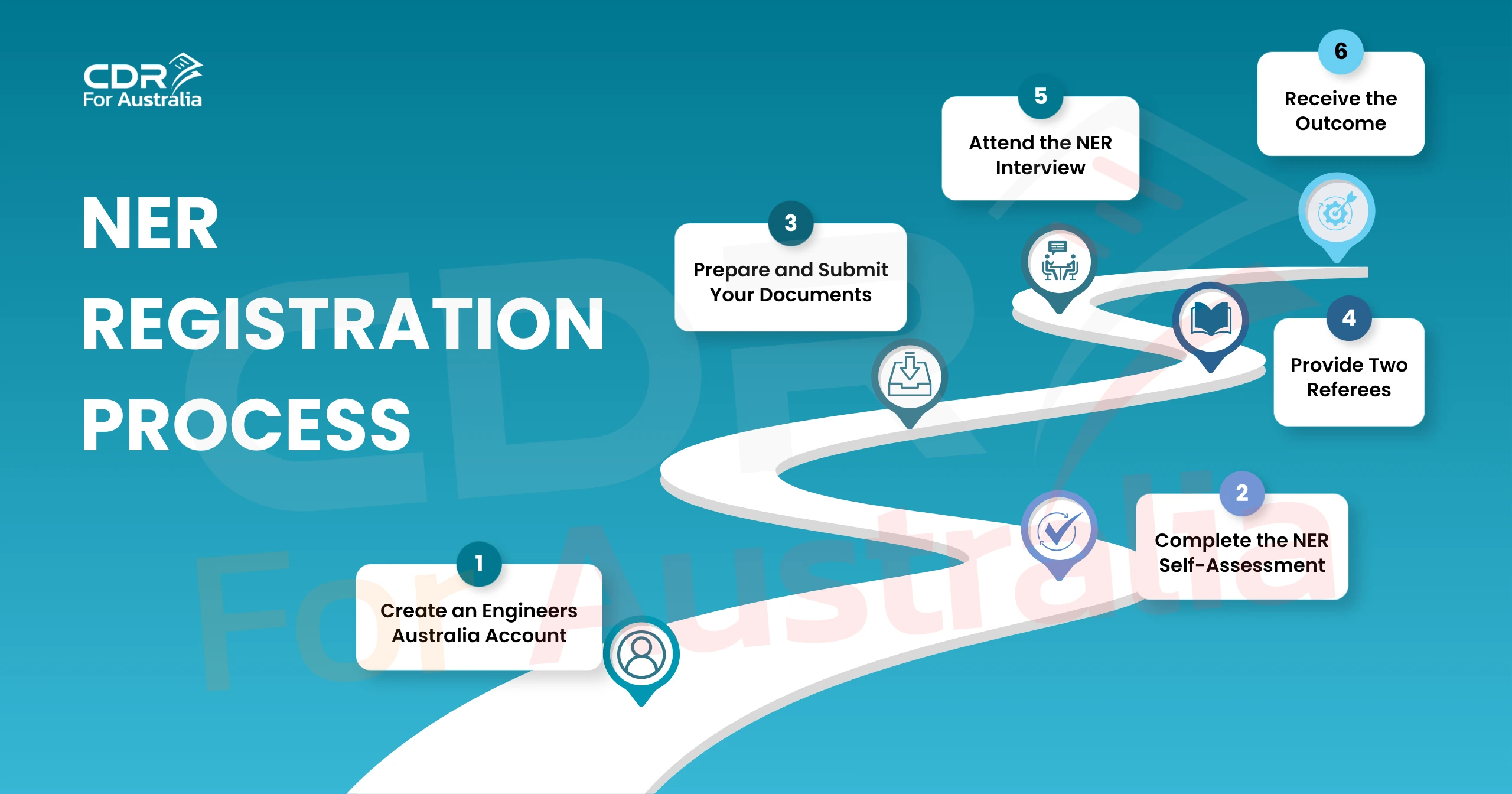
The NER application process is a multi-stage process.
Step 1: Create an Engineers Australia Account
To get started, you will need to register with Engineers Australia via the Engineers Australia member portal.
Step 2: Complete the NER Self-Assessment
Applicants submit an online self-assessment of their competencies as defined by the NER competencies.
This stage is to assess the suitability of your qualifications, experience and professional activities for NER Registration.
Step 3: Prepare and Submit Your Documents
Some supporting evidence is necessary.
For instance, non-members must have photo identification, a comprehensive CV and proof of recognised qualifications or an Engineers Australia assessment outcome.
A CV shouldn’t just be a list of jobs and working dates. Engineers Australia is looking for a comprehensive CV with content regarding duties, projects, accomplishments, challenges or opportunities faced, skills and expertise acquired, decisions made, and results obtained.
Step 4: Provide Two Referees
Please make sure that you bring two suitable professional referees.
Engineers Australia may call the referees to talk to them about your engineering experience and professional work.
Step 5: Attend the NER Interview
Candidates who make it to the next stage of the application process will be interviewed by a suitably qualified NER assessor who is also an Engineers Australia member.
The interview is a chance to display your professional experience and competency.
Step 6: Receive the Outcome
Following assessment, Engineers Australia will advise you of the result. If successful, you will be added to the National Engineering Register.
How Long Does NER Registration Take?
The time taken for NER Registration will vary from applicant to applicant depending on the type of documentation, the availability of referees, assessment requirements and interview scheduling.
Rather than using an estimate of the processing time, it is best to complete a full and accurate application from the outset.
It may be difficult to assess if there is insufficient evidence of professional experience, references that are not appropriate, or poor competency information.
NER Registration vs Chartered Engineer
The NER Registration and the Engineers Australia Chartered credential are two professional qualifications.
The NER is a national register for Professional Engineers, Engineering Technologists and Engineering Associates. Chartered (CPEng) is another pathway to professional recognition for engineers offered by Engineers Australia.
The route will vary based on your working context, experience, career goals and statutory registration requirements, if applicable, for your work.
Engineers cannot presume that NER takes the place of state or territory registration. Australia has a different statutory registration system and requirements differ from state to state.
NER Registration and State Engineering Registration
It is important to note that NER Registration is not the same as statutory state registration.
Statutory registration requirements differ between the states and territories of Australia. There are some areas of engineering practice and jurisdictions where there is a registration requirement.
Engineers Australia has also noted that some pathways of registration in states recognize NER or Chartered qualification. Depending on the jurisdiction and engineering specialty, for instance, engineers with NER or Chartered may apply them to specific parts of the assessment or registration process.
Please see requirements for your state, territory and engineering discipline before applying.
Maintaining Your NER Credential
Getting NER Registration is not the end of your professional responsibilities.
Registered Engineers are required to uphold professional standards and undertake Continuing Professional Development (CPD).
According to Engineers Australia, CPD is important for engineers to ensure they are technically competent, effective at work, capable and well led, and have a sound understanding of their profession. CPD is also applicable to NER and Chartered Maintenance.
Hence, applicants are advised to be aware of their continued responsibilities prior to applying for NER.
Common NER Application Mistakes
Writing a Generic CV
A simple CV with companies, positions and dates might not sufficiently show your professional engineering ability.
Your CV should contain relevant details regarding your engineering duties, projects, technical decisions, and accomplishments.
Failing to Connect Experience With Competencies
Just saying that you have managed a project or designed a system is not sufficient.
Discuss what you did, why you did it, how you solved the problem and the outcome.
Choosing the Wrong Referees
Your referees should be familiar with your recent professional engineering activities and be able to give meaningful verification.
Providing Vague Project Descriptions
Try not to use statements like:
I was involved in a number of engineering projects.
Rather, describe the engineering problem, your role, technical approach, decision(s), and measurable result.
Ignoring the Interview
Interviews and assessments by the NER are a vital component of the process. Applicants should be ready to explain their experience and show how this has enabled them to acquire the necessary skills.
How CDR for Australia Can Help With NER Registration
The process of preparing an NER application can be difficult, especially if you do not know how to relate your experiences to the competencies.
At CDR for Australia, we offer expert assistance to engineers in the preparation of their Australian engineering documents.
We can help you with your NER Registration in many ways:
- It is important to understand the eligibility criteria for NER.
- Reminding yourself about your professional past
- Engineering Experience Structure:
- Making and enhancing your professional CV.
- Connecting experiences to appropriate competencies.
- Recognizing missing parts of supporting evidence
- Organising application documentation
- Checking your application documents
- Building up for NER interview
- Supporting through the Application process
Our vision is to assist you to showcase your original experience and engineering skills in a clear, concise and professional format.
Note: CDR for Australia is not responsible for making the registration decision for NER. Applications are assessed independently by Engineers Australia, and the decision as to whether an Applicant fulfills Engineers Australia’s registration requirements is theirs.
Why Choose Professional NER Application Support?
While you might be an expert at your job, you’re not necessarily an expert at presenting that job.
Your presentation of experience can be clear and consistent with professional support beforehand to identify your weaknesses in your documentation prior to submission.
This is particularly beneficial when:
- Overseas-qualified engineers
- Experienced engineers in their practice
- Engineers who need to switch between engineering careers
- Engineers who are not sure of competency requirements
- Those preparing for their interview with the NER.
- Engineers who got an unsuccessful outcome earlier and wish to enhance their application

Looking for expert CDR Writer for Engineers Australia?

Creating a CDR Report may be difficult due to Engineers Australia’s standards and rules ( EA ). Our experienced engineers have assisted many people in obtaining approval for their report from the EA via the use of powerful projects.
Start Your NER Registration Journey
For engineers who are looking to be recognized by Australian engineers for their qualifications, experience and engineering competency, NER Registration may be a significant milestone in their career.
A successful job application requires more than just a CV being sent, however. Your experience should be well presented, evidence should be accurate and ready for the assessment process, and you should be able to demonstrate your competency during the process.
If you are considering applying for NER Registration in Australia, and you are looking for expert help preparing for your application and documentation, CDR for Australia can help you understand the process and prepare your documentation.
Looking to write your NER application? Call CDR for Australia today & speak to our team about your needs.
Frequently Asked Question (FAQs)
What does NER stand for?
NER stands for National Engineering Register. It is the national framework for the registration of Professional Engineers, Engineering Technologists and Engineering Associates in Australia, operated by Engineers Australia.
Do I need to be an Engineers Australia member to apply for NER?
No. Engineers Australia says it’s not required to be a member to apply for an NER credential. The application and documentation requirements are different for non-members.
How much engineering experience do I need for NER?
Typically, applicants are required to have minimum full-time equivalent (FTE) engineering experience of five (5) years, with four of these years being postgraduate engineering experience, within the past 10 years.
Can overseas engineers apply for NER Registration?
Yes, overseas engineers may be able to apply provided they fulfil the relevant Engineers Australia requirements. Getting the right Engineers Australia migration skills assessment can lead to NER registration.
Is NER the same as Chartered Engineer?
The NER and Engineers Australia Chartered are two different registration/credential pathways. Your suitable route is determined by your skills, experience and working situation.