


HR Consultant Australia: Skills and Salary 2026
Businesses across Australia bring in HR consultants for all kinds of reasons. Maybe a small business owner needs help writing a workplace policy but has no HR staff on hand. Maybe a large company is going through a restructure and needs extra hands for a few months. An HR consultant in Australia steps into these gaps, offering advice and hands-on support without becoming a permanent part of the payroll. This differs from an in-house HR manager, who is tied to one business long-term.
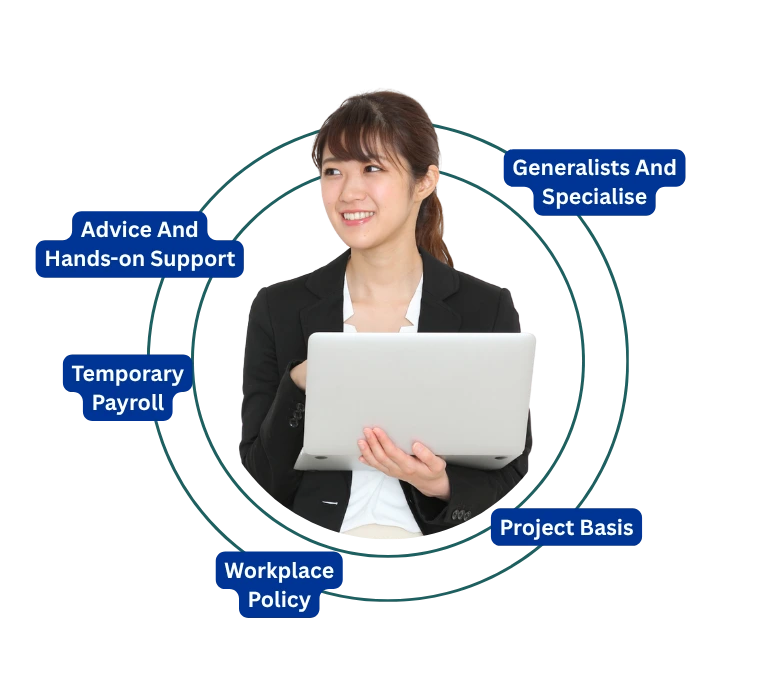
A consultant usually works on a project basis, sometimes with several clients at once, moving between industries depending on where the work is. The scope of the role changes from job to job. Some consultants are generalists who handle recruitment one week and a workplace dispute the next.
Others specialise in one area, like organisational restructuring or executive search. Either way, the work touches recruitment, employee relations, compliance, and performance management. Demand for this kind of support has stayed fairly steady in recent years, particularly in Sydney and Melbourne, where growing businesses often prefer outsourcing HR over building an internal team from scratch.
What Does an HR Consultant Do in Australia?
Ask ten HR consultants what their week looks like and you’ll get ten different answers. Company size and industry shape the job more than almost anything else. That said, a few tasks show up again and again across most roles.
Common responsibilities include:
- Advising management on recruitment and selection practices
- Writing and updating workplace policies and procedures
- Supporting onboarding, induction, and staff training programs
- Handling employee relations issues, including disputes and grievances
- Advising on compliance with Fair Work laws and workplace safety obligations
- Assisting with performance reviews and broader performance management
- Supporting workforce planning during growth or restructuring
- Running HR projects such as culture surveys or policy audits
Some people in this line of work go independent and pick up clients as freelancers. Others join an HR consulting firm and get placed with different businesses depending on demand. Large companies sometimes bring in an outside HR consultant purely for one job, like managing a restructure or rolling out a new HR system, then the engagement ends once the project wraps up.
Key Skills an HR Consultant in Australia Needs
Technical knowledge only gets a consultant so far. The people who do well in this field tend to combine that knowledge with genuinely strong communication and judgment.
Skill Area | Why It Matters |
Employment law knowledge | Keeps advice on contracts, pay, and disputes in line with Fair Work standards |
Communication skills | Needed to explain policy clearly to both staff and management |
Problem-solving ability | Helps resolve workplace conflict and staffing issues before they escalate |
Recruitment expertise | Supports hiring managers through interviews and selection decisions |
Change management | Useful when guiding a business through a restructure or new system |
Data and reporting skills | Helps track HR metrics like turnover, absenteeism, and engagement |
Interpersonal skills probably matter more than any line item on a job description can capture. A consultant working across Australia’s HR market deals with people at every level of a business, from a junior staff member to a nervous CEO mid-restructure, so being able to build trust quickly is close to non-negotiable.
How to Become an HR Consultant in Australia?
There’s no single doorway into this career, but most people who end up here follow a fairly similar route, even if the timeline varies a lot from person to person.
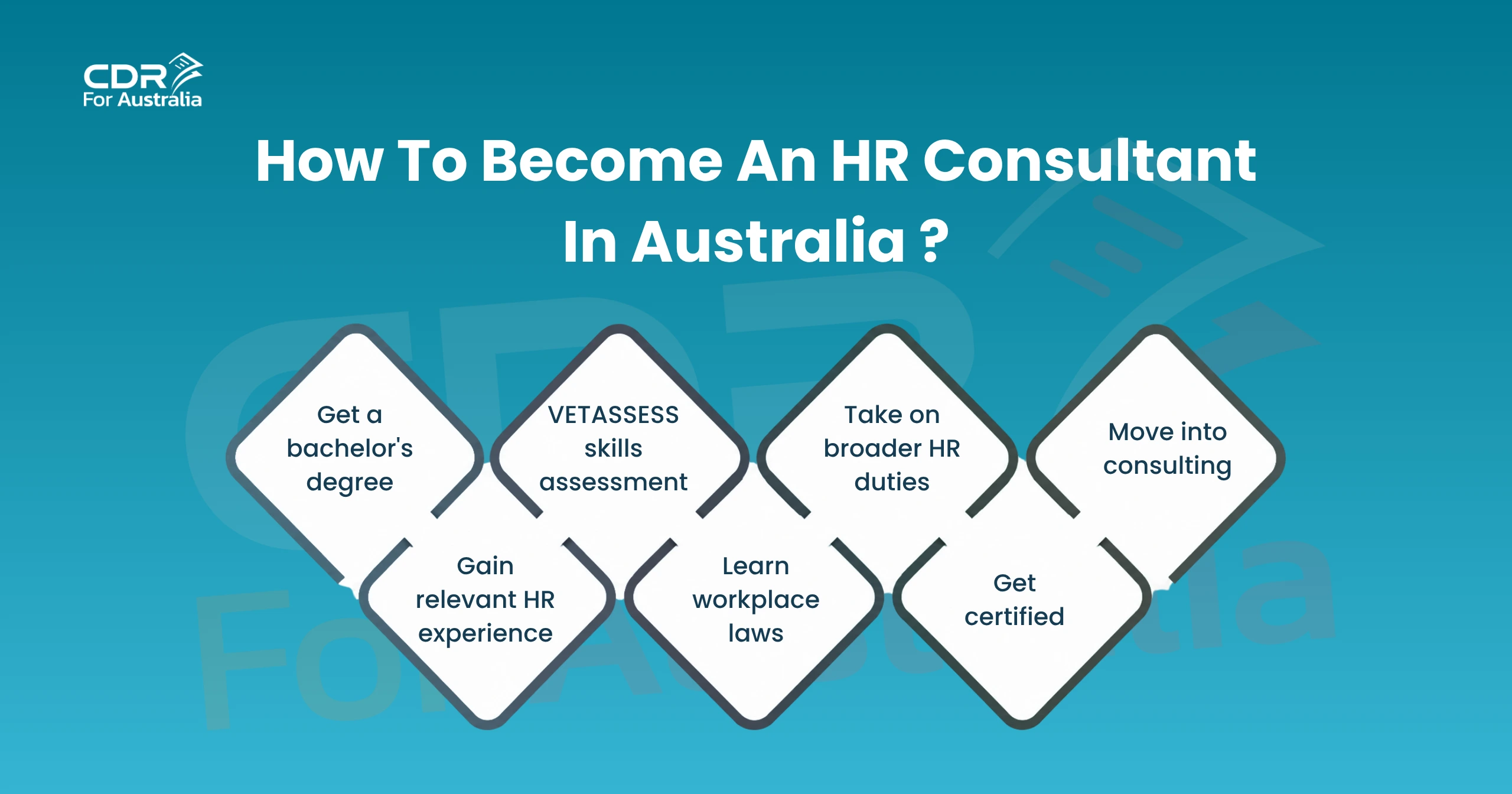
Steps typically followed include:
- Complete a bachelor’s degree in human resources, business, or a related field
- Gain entry-level experience in HR administration or generalist roles
- Build solid knowledge of Fair Work legislation and workplace safety requirements
- Take on broader responsibilities, like recruitment, employee relations, or policy writing
- Consider certification through bodies such as the Australian Human Resources Institute (AHRI)
- Build a network within the HR industry
- Move into consulting, either independently or through an established firm
Most people spend several years in generalist HR roles before making the jump to consulting. That time isn’t wasted; it’s where practical knowledge comes from that lets a consultant walk into an unfamiliar business and give advice with confidence. Some choose to specialise early, in an area like workplace relations or organisational development, rather than staying broad.
Industries That Hire HR Consultant Roles in Australia
HR expertise is needed almost everywhere, but demand isn’t evenly spread. Some sectors lean on outside HR support more heavily than others, usually because of workforce size, regulatory complexity, or how fast the industry itself is changing.
- Healthcare and aged care
- Construction and mining
- Retail and hospitality
- Manufacturing and logistics
- Technology and finance
- Education and training providers
- Government and not-for-profit organisations
Smaller businesses in these sectors often can’t justify a full-time HR department. Outsourced HR fills that gap, and it’s especially common in Sydney, where growing companies need compliance support without the overhead of a large internal team.
In-House vs Outsourced HR Consultant Australia Options
Businesses generally land on one of two models. The first is bringing in a consultant on a short-term or project basis for something specific, like a policy review or a restructure. The second is signing on with an outsourced HR firm on an ongoing retainer, which gives continuous access to advice without carrying a full-time salary.
Larger companies in Sydney and Melbourne often blend both approaches, keeping a lean internal team while calling in outside consultants for specialised work such as workplace investigations or executive recruitment. Smaller businesses, particularly outside the major cities, tend to lean more heavily on outsourced support simply because it costs less than building a department from the ground up.
Human Resource Consultant Salary in Australia
Pay varies a fair bit depending on experience, location, and whether someone works independently or through a firm. According to Jobs and Skills Australia, which draws on ABS wage data, the median salary for this occupation nationally sits at $102,440 per year. Job platforms like SEEK report a somewhat wider working range, generally between $90,000 and $110,000, once experience level and firm size are factored in.
Experience Level | Approximate Annual Salary (AUD) |
Entry-level (1–3 years) | $83,000 – $88,000 |
Mid-level (4–7 years) | $95,000 – $115,000 |
Senior level (8+ years) | $130,000 – $145,000 |
Location plays a role too. Sydney and Melbourne tend to pay above the national figure, partly because of cost of living and partly because there’s stronger demand from HR consulting firms based in those cities. Independent consultants who bill hourly usually set their rate based on experience and how complex the project is.
A senior specialist handling a sensitive workplace investigation will charge well above someone doing routine HR admin. Freelance and contract work is common in this field, more so than in most corporate roles.
A business might bring someone on for a fixed number of hours a month rather than committing to a salaried position. This suits companies with seasonal HR needs, like retailers during peak hiring season, or organisations going through a short, defined period of change. Rates depend heavily on specialisation; employee relations and workplace investigation work generally commands more than general HR support.
HR Consultant vs HR Manager vs HR Officer
These job titles get used loosely, and the overlap causes real confusion, so it’s worth laying out the differences plainly.
Point | HR Officer | HR Manager | HUman Resource Consultant |
Main focus | Daily HR admin tasks | Company-wide HR strategy | Advisory support on specific issues |
Works with | One organisation | One organisation | Multiple clients or projects |
Team role | Reports to HR manager | Leads internal HR team | Works independently or with a firm |
Work style | Ongoing, routine tasks | Long-term, internal leadership | Project-based, outside expertise |
The consultant role tends to bring more variety day to day, simply because every client and project is different. It also demands a broader skill set consultants regularly step into businesses they’ve never worked with before and need to get a read on the systems and culture fast, sometimes within the first meeting.
Career Growth for HR Consultants in Australia
There’s more than one direction to take this career. Some consultants move into senior or principal roles at larger firms, taking on bigger clients and leading project teams. Others eventually go out on their own once they’ve built a reputation and a client base that can sustain.
A smaller group moves into specialised, higher-fee work executive search, workplace investigations, organisational development where deep expertise matters more than breadth. Employment in this occupation has stayed broadly stable rather than booming, but the underlying need for experienced HR support doesn’t seem to be going anywhere soon.
Professional networking does a lot of the heavy lifting here. Referrals, industry events, and membership with bodies like AHRI tend to generate more work than cold outreach ever does. Staying current on Fair Work changes matters too; giving outdated advice can create real legal risk for a client, and that’s the kind of mistake that follows a consultant’s reputation around.
People who keep learning, whether through formal certification or shorter courses in areas like mediation, generally move into better-paid specialist work faster than those who stay in general HR support indefinitely.

Looking for expert CDR Writer for Engineers Australia?

Creating a CDR Report may be difficult due to Engineers Australia’s standards and rules ( EA ). Our experienced engineers have assisted many people in obtaining approval for their report from the EA via the use of powerful projects.
Where HR Consultant Demand Is Strongest in Australia?
Job opportunities for Human Resource consultants aren’t spread evenly across the country. Sydney and Melbourne lead by a wide margin, while other states offer smaller but still steady demand, often tied to a specific industry.
State/Territory | Demand Level | Why |
New South Wales (Sydney) | Highest | Largest concentration of head offices, corporate HR teams, and outsourced HR firms |
Victoria (Melbourne) | Highest | Strong corporate sector and a well-established HR consulting industry |
Queensland (Brisbane) | Moderate | Driven by construction, healthcare, and mining-adjacent businesses |
Western Australia (Perth) | Moderate | Steady demand tied to the mining and resources sector |
South Australia (Adelaide) | Lower | Smaller job market with fewer large firms hiring Human Resource consultants |
Tasmania, NT, ACT | Lowest | Limited HR-specific roles; most positions are broader HR generalist work |
This matters beyond just where the jobs are. Several states include HR-related occupations, such as Human Resource Adviser, on their nomination lists for the Subclass 190 and 491 visas. Regional areas can sometimes offer a faster nomination pathway under the 491 visa, since it targets occupations in demand outside the major cities, even though metro salaries tend to run slightly higher.
Anyone deciding where to apply, or which state to target for a visa nomination, is better off checking current state and territory occupation lists directly, since they change from year to year.
Moving to Australia as an HR Consultant
Overseas professionals hoping to work as an HR consultant in Australia usually apply under the occupation code for Human Resource Adviser, which officially lists “Human Resource Consultant” as an accepted alternative title. This sits within the skilled migration system, and most applicants need a positive skills assessment before a relevant visa application can move forward.
VETASSESS is the assessing authority for this occupation. Applicants typically need a bachelor’s degree or higher in a closely related field, plus relevant work experience, and the VETASSESS Skill Assessment process checks both against the required standard before issuing an outcome.
Once that assessment comes back positive, candidates can look at pathways under Professional Skilled Migration, which covers occupations assessed by VETASSESS, HR-related roles included. Documentation matters at every stage here. A resume writing submission that clearly reflects real HR duties and responsibilities can strengthen an application, and a properly written Statement of Purpose (SOP) is often required for visa or education pathways tied to skilled migration.
Anyone researching current demand before applying can check the In Demand Jobs in Australia overview, which covers which roles, including HR-related occupations, are seeing stronger interest in 2026. Those exploring employer-sponsored options might also look at the Skills in Demand Visa Australia (Subclass 482) breakdown for eligibility and occupation list details. Occupation codes and skill level classifications used throughout this process follow the ANZSCO classification system maintained by the Australian Bureau of Statistics.
Frequently Asked Question (FAQs)
What does an HR consultant do?
An HR consultant advises businesses on workplace policies, recruitment, employee relations, and compliance with employment law. They might work independently or as part of a consulting firm, and could be supporting one client or several at the same time.
What skills do HR consultants need?
Employment law knowledge, communication, problem-solving, recruitment expertise, and the ability to manage change all matter here. Interpersonal skills are just as important, since the job means dealing with people at every level of a business.
How much do HR consultants make in Australia?
Jobs and Skills Australia puts the median salary for this occupation at around $102,440 a year nationally. Job platforms show a wider range, generally $90,000 to $145,000, depending on experience, location, and whether the person works independently or for a firm.
How much do HR consultants charge per hour in Australia?
Hourly rates swing quite a bit depending on experience and the complexity of the work involved. Someone handling a sensitive workplace investigation or a full restructure will typically charge more than a consultant doing routine HR support.
Is HR in demand in Australia for foreigners?
Yes. Human Resource Adviser, the occupation code that covers HR consultant work, appears on Australia’s skilled migration lists. Overseas applicants generally need a positive skills assessment and relevant qualifications before they can apply for a visa in this occupation.
Who are the Big 4 consultants in Australia?
Deloitte, PwC, EY, and KPMG make up the Big 4 in Australia. All four offer HR consulting services alongside their broader tax, audit, and advisory divisions, and they hire for HR consulting roles across their major city offices.
What are the 7 pillars of HR?
The 7 pillars usually cover recruitment and selection, performance management, learning and development, compensation and benefits, employee relations, HR compliance, and workforce planning. Most HR professionals build their work around some version of this framework.