


Chartered Engineer Assessment Australia
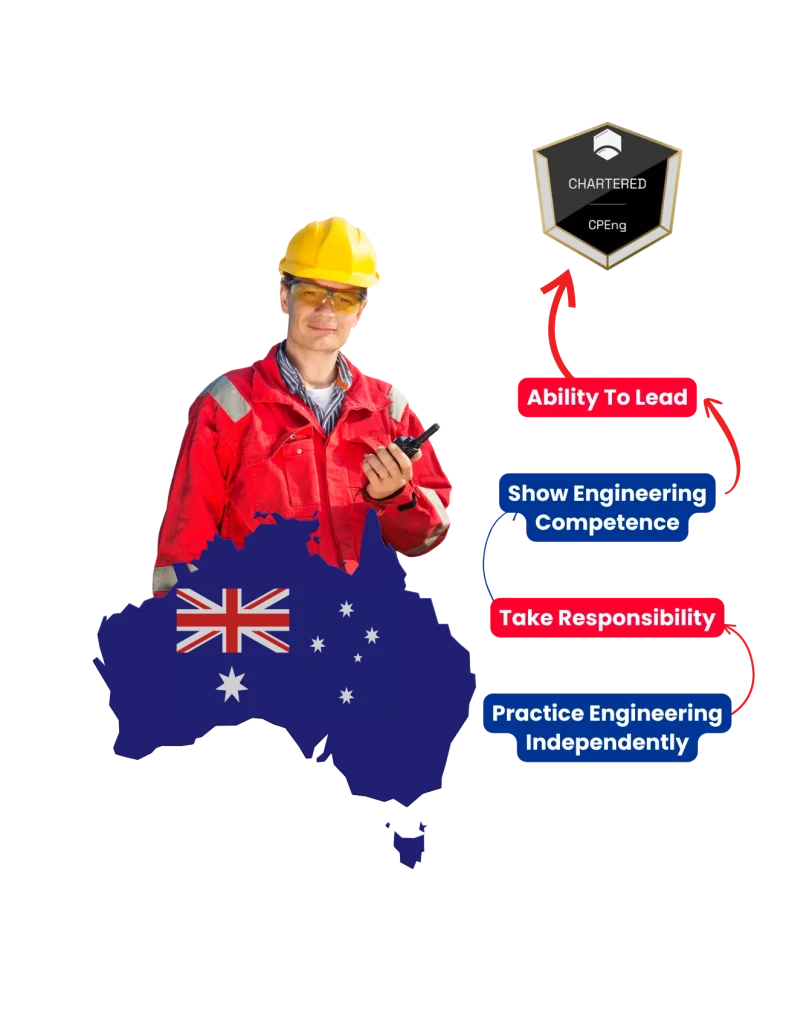
For engineers seeking to demonstrate their ability to lead, to show engineering competence, take responsibility, and to practise engineering independently in Australia, becoming a Chartered Engineer is an important milestone of their engineering career.
The Chartered Engineer Assessment is a coursework assessment carried out by Engineers Australia that tests an engineer’s professional capability against the requirements for Chartered status. There are a number of different pathways to achieve the Chartered credential, depending on your level of professional experience.
At CDR for Australia, we offer engineers professional preparation and documentation assistance that will assist them in their Chartered Engineer application. Our support will help you to understand what is required, plan your engineering evidence, prepare engineering documentation based on competency, and to feel confident in the assessment process.

What Is a Chartered Engineer Assessment?
The professional assessment process to determine whether an engineer has acquired the competencies needed to be Chartered is the Chartered Engineer Assessment administered by Engineers Australia.
Chartered status is given to engineers who have acquired the skills, experience and judgment needed to work independently and responsibly.
For qualified engineers, the Chartered status may offer them a professional seal of approval for their engineering skills and experience.
There are now several Chartered pathways available to engineers through professional experience, with Engineers Australia. The Chartered pathway is typically followed by engineers with 5-15 years of postgraduate engineering experience, while engineers with 15+ years of experience may be eligible for the streamlined Chartered via Interview pathway.
What Is Chartered Professional Engineer (CPEng)?
Engineers Australia’s Chartered credential framework bestows the post-nominals: Chartered Professional Engineer (CPEng).
Chartered status represents a process of evaluation of an Engineer’s qualifications and confirms that the Engineer can make a contribution using engineering knowledge and judgement in a professional manner.
Successful applicants are likely to be awarded a Chartered post-nominal, for example:
- Chartered Professional Engineer (CPEng)
- Chartered Technologist (CEngT)
- Chartered Associate (CEngA)
The right credential is dependent on the occupational category and professional situation of the applicant.
Why Become a Chartered Engineer in Australia?
Experienced engineers can use their charter status to show that they are capable of their job to employers, clients, colleagues and the rest of the engineering profession.
Some of the potential benefits include:
Professional recognition
Chartered status is an official registration of an engineer’s professional skills and experience.
Demonstrating independent practice
The assessment is based on an engineer’s capacity to use professional knowledge, judgement and skills independently.
Career development
Chartered status may enable experienced engineers to provide evidence of their skills as they seek senior engineering roles and for professional development.
Professional credibility
When dealing with employers, clients and engineering organisations, a Chartered credential can be an added means of professionalism.
International professional recognition
Chartered is a worldwide recognized professional award, and is regarded as valuable for engineers who are seeking expanded professional recognition, according to Engineers Australia.
But don’t mistake Chartered for a migration skills assessment. It is a professional qualification and is submitted to Engineers Australia for evaluation.
Chartered Engineer Assessment Requirements
Specific requirements are dependent on your professional experience and the Chartered pathway you are embarking on.
Engineers Australia recommends that applicants typically require:
- Engineers Australia membership
- A minimum of 5 years of experience in postgraduate engineering work.
- A suitable engineering experience that is relevant to the application
- The following are all considered to be forms of continuing professional development (CPD) evidence:
- A completed self-assessment
- Industry review
- Support for competency statements
- A detailed CV
- Relevant work documentation
- Chartered assessment interview (CITT) successful completion.
Engineers Australia assesses the applicant’s suitability during the pre-assessment stage, including their experience, CV, CPD, self-assessment and industry reviewer information.
A different pathway may be available for engineers with over 15 years of experience. According to Engineers Australia, the Chartered via Interview pathway is designed for experienced engineers and will not require an industry review or formal assessment.
Who Can Apply for Chartered Engineer Assessment?
Your eligibility depends primarily on your professional experience, membership and professional responsibilities.
Engineers with less than 5 years' experience
In general, engineers who have worked for less than five years after graduation should not be acceptable for the standard Chartered application. This period is recommended to be spent building engineering experience, engineering professional competence and Continuing Professional Development towards Chartered status.
Engineers with 5–15 years' experience
Chartered path is suitable for engineers who have between 5 and 15 years of postgraduate engineering experience.
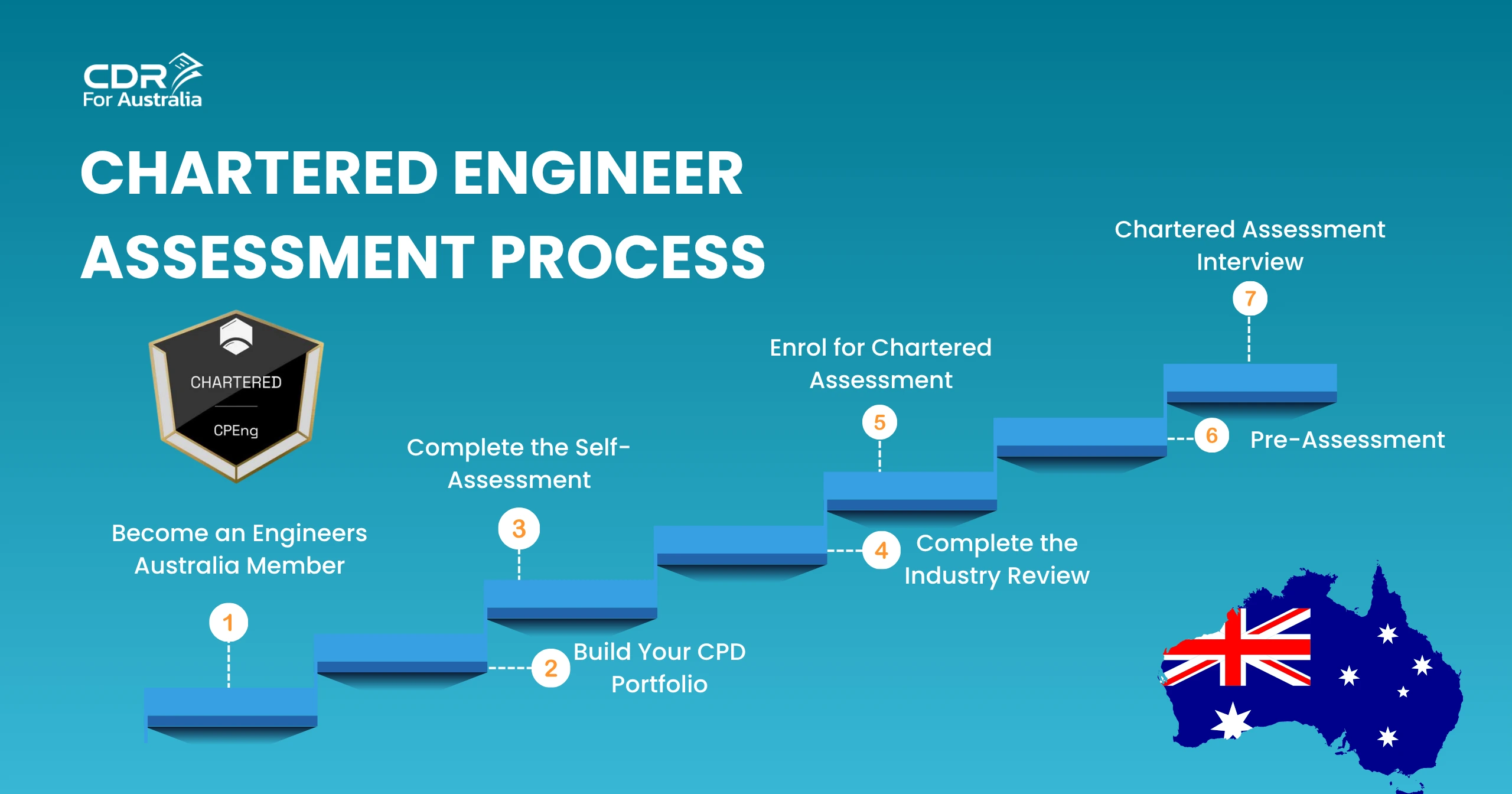
This pathway includes self-assessment, industry review, enrolment and pre-assessment, and an assessment interview.
Engineers with 15+ years' experience
You can progress to Chartered status through the pathway of an interview for people who have at least 15 years of postgraduate experience as a senior engineer.
Engineers Australia also considers that applicants in this pathway will have demonstrated strong leadership within their careers, such as leadership of teams or projects.
Chartered Engineer Assessment Process
Knowing what is in store for your assessment can make the prepping process much easier.
Step 1: Become an Engineers Australia Member
Applicants must be a member to apply for Chartered status.
Please note: If you are not already a member of Engineers Australia, you need to take a look at the membership criteria before you begin the Chartered application.
Step 2: Build Your CPD Portfolio
Continuing Professional Development is key to Chartered assessment.
Your CPD log can show how you have kept and enhanced your professional engineering knowledge.
Activities that can count towards CPD include:
- Technical training
- Professional development courses
- Engineering conferences
- Workshops
- Safety training
- Professional events
- Networking
- Engineering discussions
- Site inductions
- Other relevant professional learning activities are included.
Applicants are required to demonstrate evidence of suitable and sufficient CPD as required by Engineers Australia.
Step 3: Complete the Self-Assessment
Applicants following the standard pathway will undertake an online self-assessment.
You will determine your occupational category and area of practice and evaluate your competence in relation to the competency requirements.
When engineers evaluate their skills, they employ four different levels in doing so:
- Developing
- Functional
- Proficient
- Advanced
The self-assessment should be backed up by authentic professional experiences and evidence, not by generic descriptions.
Step 4: Complete the Industry Review
Once the self-assessment is done, the applicant(s) eligible to move on to industry review will do so.
You will make statements about how your professional experience and supporting evidence demonstrate the competencies.
You’ll also nominate industry reviewers.
Engineers Australia suggests that reviewers should be Chartered members or experienced engineering professionals with knowledge of your work, and with experience in the same area of practice in which you are reviewing.
Step 5: Enrol for Chartered Assessment
Once the industry review has been done, applicants may proceed with enrolment.
The following information is required with the application:
- Photo identification
- Detailed CV
- CPD records
- Self-assessment information
- Industry review information
- Other requested documentation
Step 6: Pre-Assessment
The pre-assessment team at Engineers Australia assesses the application and decides if the applicant is a good fit for the program.
The review may take into account:
- Engineering experience
- CV quality
- CPD
- Self-assessment ratings
- Comments and evidence
- Industry reviewer information
If necessary, applicants will be asked to supply information.
Step 7: Chartered Assessment Interview
Those who qualify for the first round are then invited to an assessment interview.
You may need to talk about recent engineering work during the interview and show evidence that your work documents enable you to practise competently and independently.
Engineers Australia says that photos, drawings, reports and other engineering documentation can be included in work documents. The interview is by video call and is about an hour long.
Chartered Engineer Competencies
One of the key components of Chartered is the ability to show professional competency.
You don’t just need to tell what you have done. It is important that you can communicate your professional judgement, responsibility, and independent capability in your engineering experiences.
Your evidence can be related to:
- Technical engineering capability
- Engineering knowledge
- Problem solving
- Professional judgement
- Risk management
- Communication
- Project and resource management
- Leadership
- Ethical practice
- Professional development
- Workplace responsibilities
- Community and public responsibilities.
- Sustainable engineering practice
The evidence material must be directly related to your experience as an engineer.
Routine or overgeneral statements may decrease the credibility of the competency evidence. Your documentation should clearly link the experience, actions, decisions and outcomes you have made with the competencies being assessed.
Documents Required for Chartered Engineer Assessment
It can be easier to prepare documents before you begin the application.
You may need documents like:
Detailed CV
Your CV should clearly reflect your engineering career, responsibilities, large-scale projects, technical roles and accomplishments.
CPD Records
These are relevant professional development activities that should be recorded on your CPD.
Engineering Work Evidence
Examples may include:
- Engineering reports
- Drawings
- Calculations
- Project documentation
- Technical specifications
- Photographs
- Design documentation
- Risk assessments
- Project records
- Other relevant professional work is also included.
Competency Evidence
Your competency statements should clearly make the link between the professional competencies you are demonstrating and your experience.
Identification
All applicants must present the proper identification at the time of application.
Chartered Engineer Assessment for Overseas Engineers
Licensed engineers with experience from overseas could also be interested in becoming Chartered.
But overseas experience in engineering should be clearly presented, and it should show the required professional skills.
If you are an overseas engineer, it is important to organise your:
- International engineering experience
- Project responsibilities
- Technical contributions
- Leadership experience
- Professional development
- Engineering evidence
- Career progression
It’s also important to know the difference between Engineers Australia skills assessment for migration and Chartered professional credential assessment.
A Chartered application is not an alternative visa pathway skills assessment if one is required in conjunction with a visa pathway application.
Chartered Engineer Assessment vs CDR Assessment
Engineers planning on working or migrating to Australia often mistake these two processes.
|
Chartered Engineer Assessment |
CDR Assessment |
|
Professional credential |
Migration skills assessment pathway |
|
Conducted by Engineers Australia |
Conducted by Engineers Australia |
|
Focuses on professional competency |
Focuses on demonstrating engineering qualifications and competency for migration assessment |
|
Generally aimed at experienced engineers |
Commonly used by certain overseas-qualified engineers |
|
Requires Chartered-specific evidence |
Requires CDR documentation where applicable |
|
Can lead to Chartered status |
Can support a migration skills assessment |
It is crucial to make the right choice. Before you apply for a migration visa, it is important to find out which skills assessment pathway is relevant to your occupation and situation.
Chartered Engineer Assessment Fees
The current fee for a standard Chartered application is $2,170 (GST included) according to Engineers Australia. Engineers Australia also has a further fee of AUD $410 for an extra area of practice.
Applicants should call Engineers Australia to check with them for current fees before applying.
Engineers Australia assessment fees are not associated with any fees for professional writing or preparation.
How Long Does Chartered Engineer Assessment Take?
This will vary depending on:
- The amount of engineering experience you have
- The pathway you use
- There are no industry reviewers available.
- Quality of your documentation
- CPD records
- Completeness of your application
- Mechanical, Physics, and Engineering Skills Assessment Schedule (Engineers Australia)
- Your interview preparation
It is therefore important for all applicants not to assume a set processing time.
Organizing your evidence and paperwork before beginning the formal process can minimize needless delays.
Common Chartered Assessment Mistakes
Using generic competency statements
General, abstract language can not show what you actually did in an engineering project.
Focusing only on job duties
Competency evidence is different from a job description. You need to demonstrate your individual contribution, decisions and professional judgement.
Weak engineering evidence
All claims within the application should be supported by evidence.
Poorly organised CV
An unclear career history can make it difficult to understand your professional development.
Incomplete CPD records
Rather than attempting to piece together years of professional development at the last minute, applicants should keep up a suitable CPD record.
Insufficient interview preparation
In the interview, you must speak about the work you have done professionally as an engineer and show your competence with evidence.
Claiming experience you cannot demonstrate
Any application must always be informed by real work experience.
How CDR for Australia Can Help With Chartered Engineer Assessment
If you have a lot of engineering experience, but you aren’t sure how to show engineering experience on a Chartered application, that can be difficult.
CDR for Australia offers a professional service to engineers who are creating their Chartered Engineer paperwork.
Where support is required, it can be in the form of:
Competency Documentation Support
We guide you to present your engineering experiences in a clear, competency-oriented way.
Engineering Evidence Review
You can discuss with us any supporting evidence you have, and we can help you see potential strengths and weaknesses in your documentation to help you identify how to make it more vivid or relevant to your professional experiences.
CV Review
We can guide you in engineering CV writing to get your career path, duties, projects and accomplishments neatly organized.
CPD Documentation Support
We can help with arranging your professional learning documents and identifying missing documentation.
Application Review
A detailed review can be used to uncover inconsistencies, insufficient explanations, unsupported claims, and documentation problems prior to submission.
Interview Preparation
We can explain to you the different kinds of professional engineering evidence you might have to discuss and practise explaining your engineering decisions and responsibilities clearly.
It is our job to assist you with your application and supporting documents. The Chartered assessment and final decision are the responsibility of Engineers Australia.

Looking for expert CDR Writer for Engineers Australia?

Creating a CDR Report may be difficult due to Engineers Australia’s standards and rules ( EA ). Our experienced engineers have assisted many people in obtaining approval for their report from the EA via the use of powerful projects.
Why Choose CDR for Australia?
When preparing a complex professional application, the right preparation support could make it easier to prepare the application.
At CDR for Australia, we are focused on providing professional documentation based on the actual competence and engineering experience of the engineer and engineering projects that they have undertaken.
We aim to provide:
- Experienced documentation support
- Engineering-focused content preparation
- Competency-based guidance
- Detailed document review
- Professional formatting
- Original, experience-based content
- Ensuring that client information is kept confidential
- Help in the preparation process
Chartered approval is not guaranteed, as the final decision is to Engineers Australia.
Start Your Chartered Engineer Assessment Preparation
Chartered status is a consideration for those who have the necessary engineering skills and background; evidence can be prepared in advance to make it more manageable.
If you are between 5-15 years of experience and are looking at the standard pathway, or 15+ years of experience and applying for the streamlined Chartered via Interview pathway, it is important to know what you need before you apply.
Need help preparing your Chartered Engineer Assessment?
Call CDR for Australia today and let us help you with Engineering Evidence, Competency Documentation, CV preparation, CPD Documentation and Chartered Assessment Interview Preparation.
Frequently Asked Question (FAQs)
What is a Chartered Engineer Assessment?
The Chartered Engineer Assessment is the professional assessment that Engineers Australia provides for engineers who are applying for Chartered status. It assesses the possession of the necessary professional skills by the applicant.
How many years of experience are required for Chartered Engineer Assessment?
Engineers Australia currently has an experience range of 5-15 years of postgraduate engineering experience identified for the standard pathway. Engineers who have 15+ years of experience can obtain Chartered through the Interview pathway.
Do I need Engineers Australia membership?
Yes. According to Engineers Australia, membership is a prerequisite for Chartered status.
What is CPEng?
CPEng is a designation of Chartered Professional Engineer. One of the professional post-nominals of the Chartered credential given by Engineers Australia.
Is Chartered Engineer Assessment the same as a CDR assessment?
No. A Chartered assessment is a professional credential assessment, and a CDR assessment is a migration skills assessment pathway that is followed by eligible engineers.